
Rust and a datum face do not mix
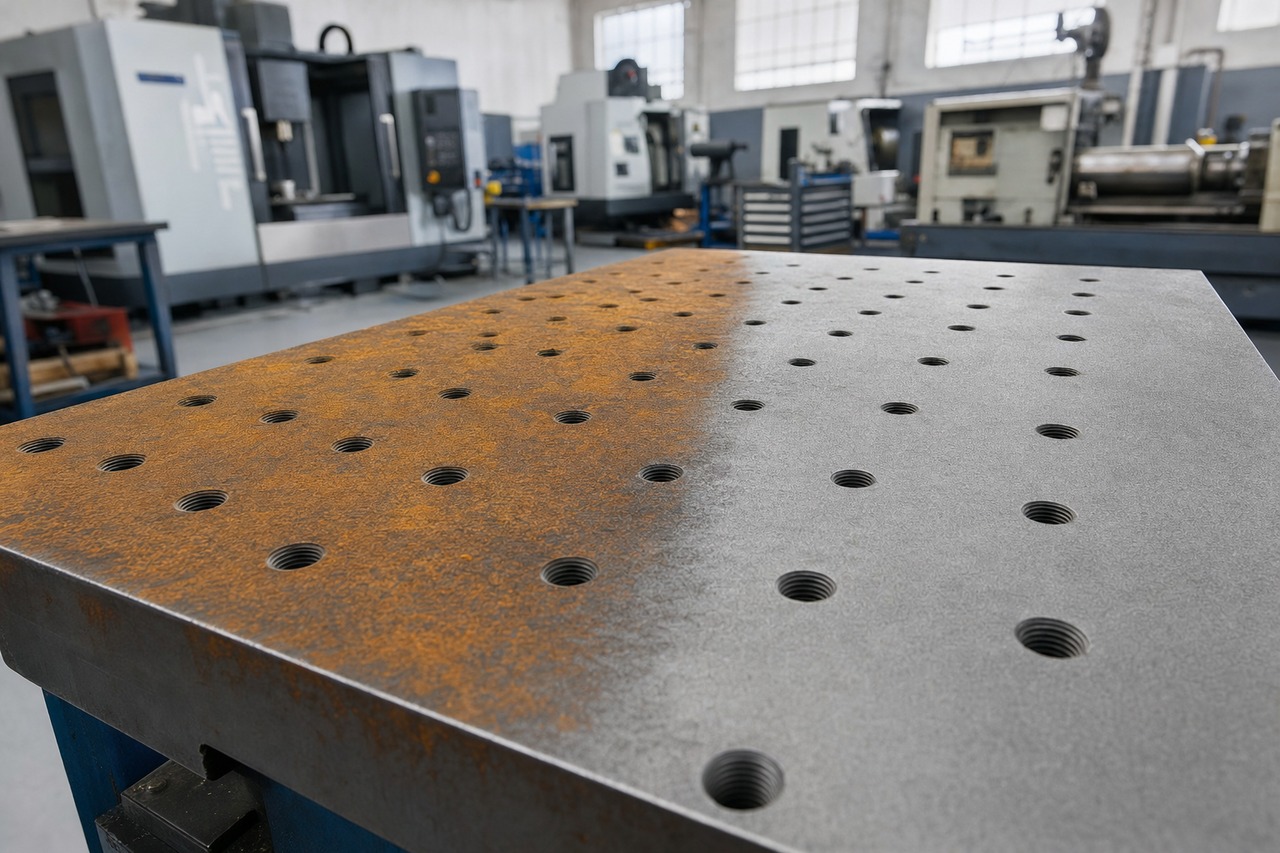
Gqeberha is a coastal city, and the sea air finds every bare steel face in a machine shop. A fixture plate left on a rack over a long weekend, or a vise that sat under a leaking roof, comes in for a maintenance rebuild with a thin orange skin of rust. You cannot measure a datum face through that, and you should not scrape or grind it off a ground surface.
So before any rebuild work is measured, our Struandale toolroom now cleans the part with a handheld pulsed fibre laser cleaner from AM.CO.ZA. This is how we do it.
Why laser cleaning, and not a wire wheel
A wire wheel, sandpaper or a blast cabinet takes rust off, but it also takes metal off. On a fixture plate or the jaws of a machine vise, the faces are the whole point of the part. Rounding an edge or opening a locating hole by a few microns means the setup no longer repeats.
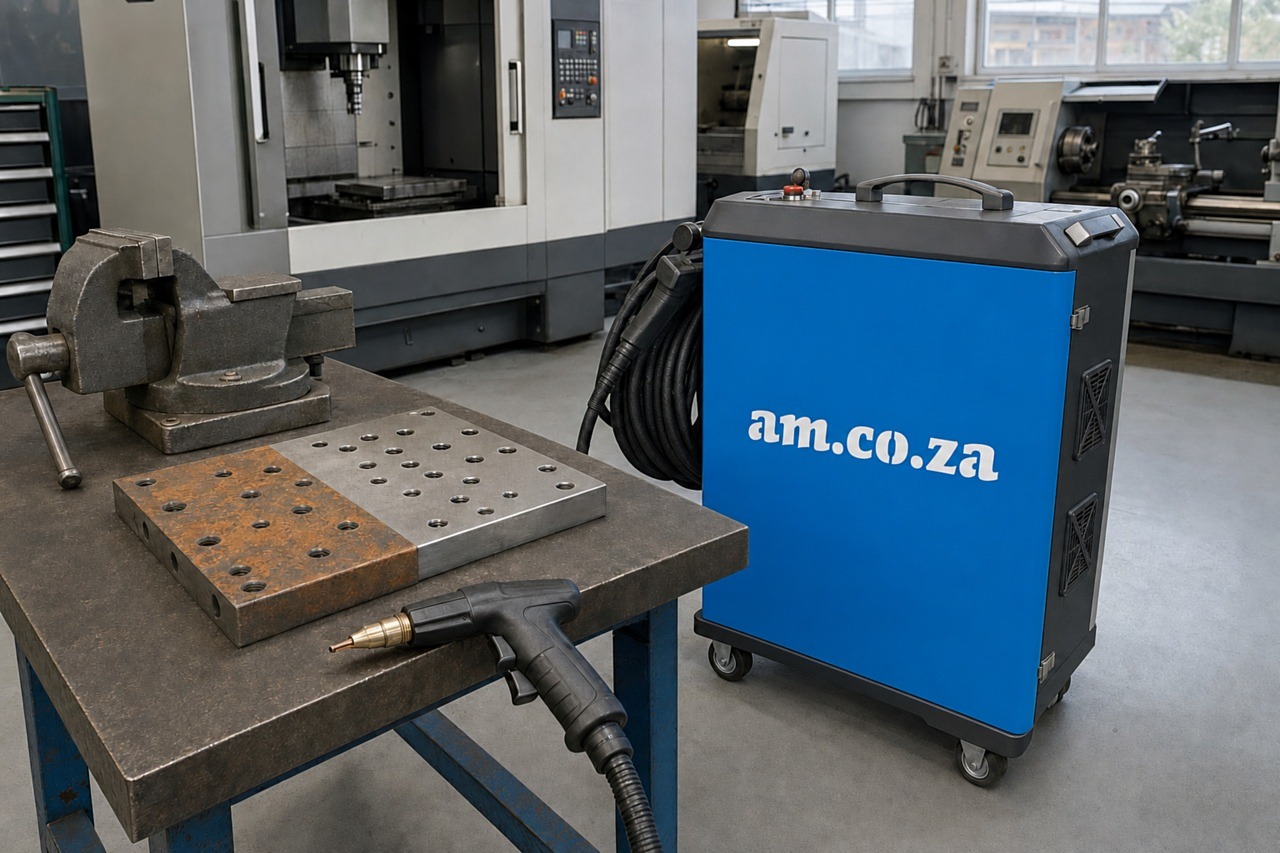
The cleaner we use is the RustOff-Original LR-PORTABLE/300, a 300W pulsed fibre laser. It is a non-contact method that removes only the rust, dirt or paint and leaves the sound metal underneath alone, with no chemicals and no consumables. For a toolroom that matters for three reasons.
No new damage
The pulsed beam lifts the oxide layer, so ground faces and threads stay as they were.
No wash-down
There is no fluid and no grit, so the part can go straight to the surface plate.
Fits a normal bay
It runs on 220V, needs a 6 bar air line to protect the lens, and the cabinet rolls on wheels with a 4 metre torch lead.
Our five steps, from rusty part to checked datum
- Tag and photograph. Every part that comes in for a rebuild gets a tag and a quick photo of its condition, so the client can see the before and after.
- Degrease first. Oil and coolant residue are wiped off. The laser handles rust well, but a thick oily film just slows it down.
- Clean a test patch. We start low on the 1% to 100% power range and clean a small patch in a corner. When the patch shows clean matte steel with sharp hole edges, we save the settings as a group on the touchscreen so the next plate of the same kind starts from there.
- Work face by face. The 2D galvo head covers an area of about 110 x 110 mm at a time. We go across each face in overlapping passes and treat tapped holes, T-slots and jaw seats last, at an angle, so the beam reaches the thread roots.
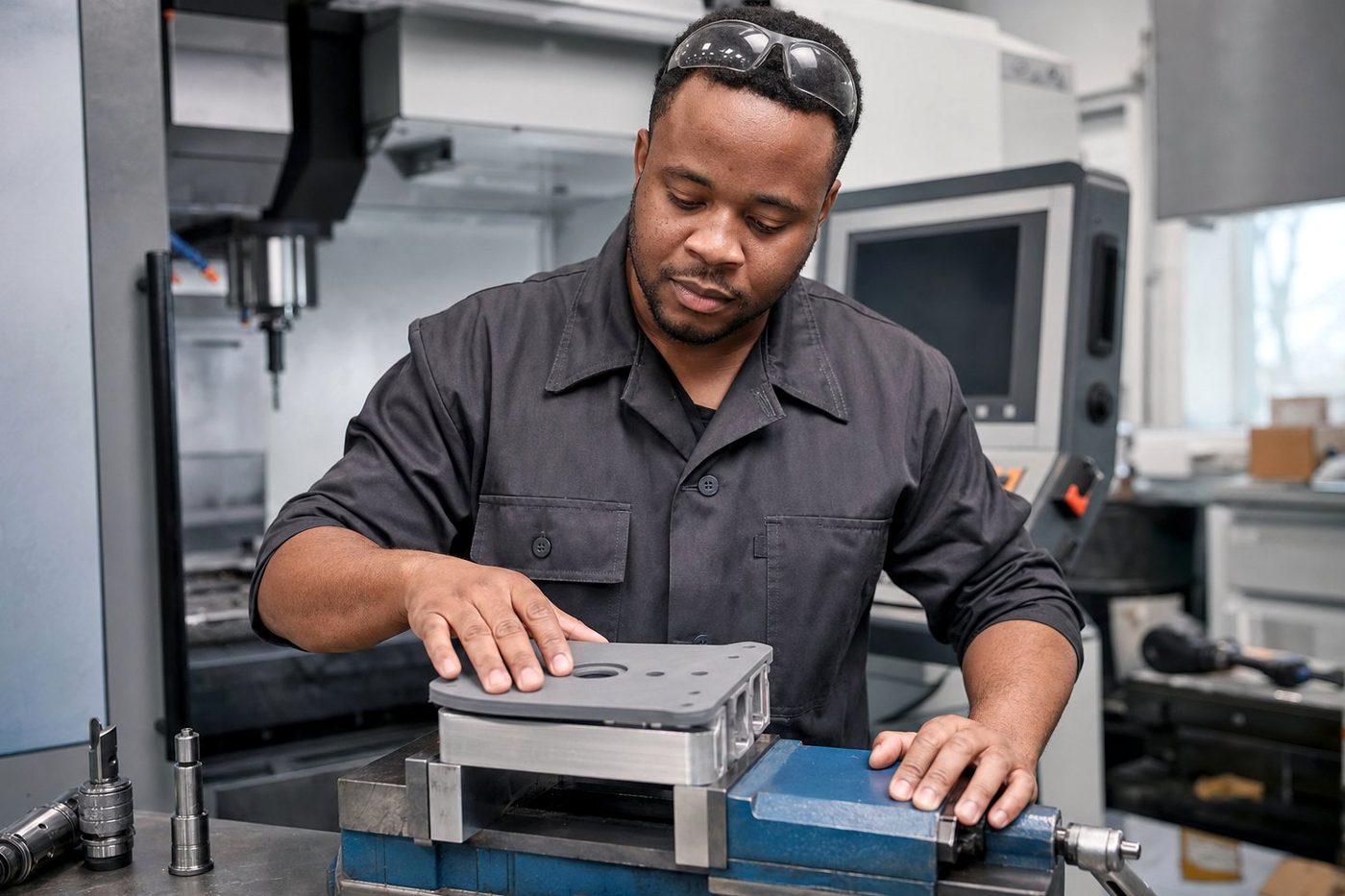
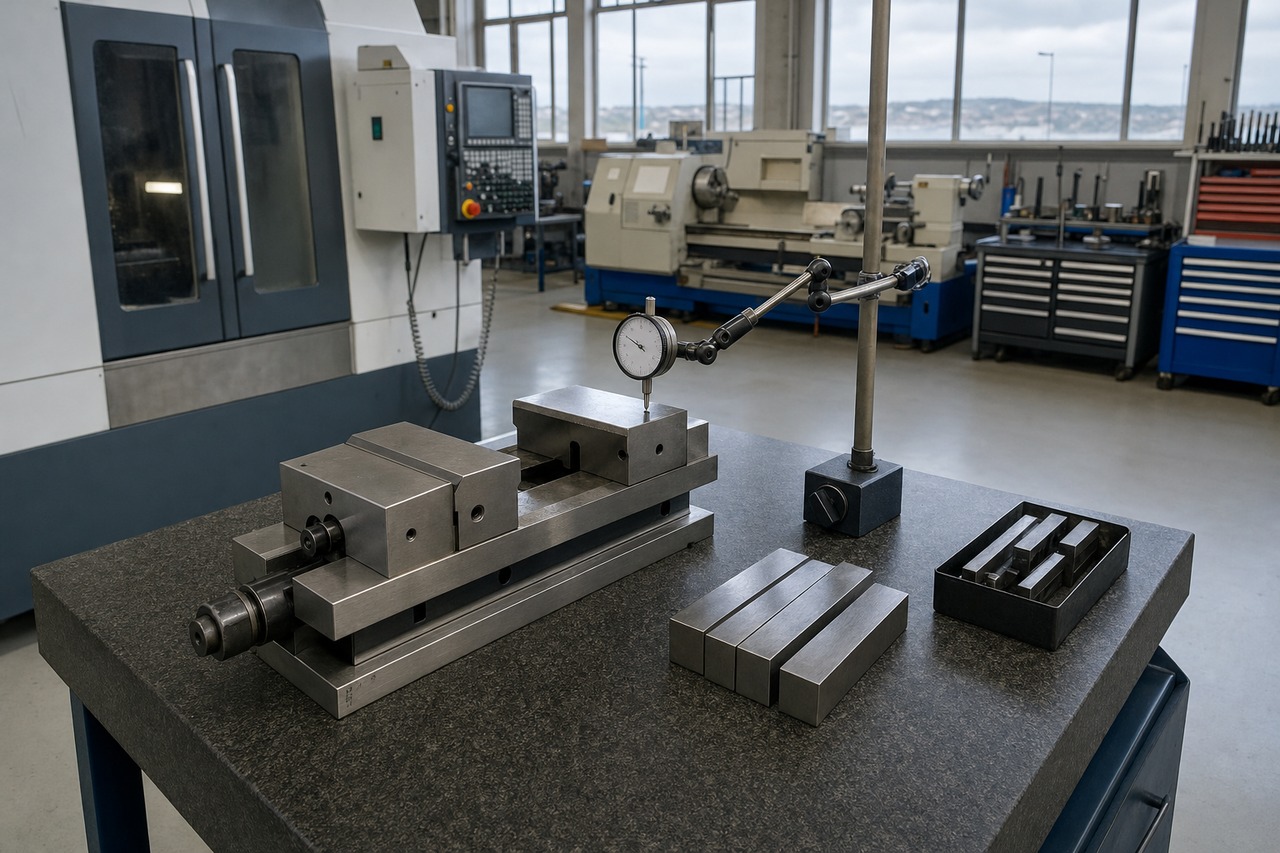
- Measure, then protect. The clean part goes to the granite surface plate for flatness, squareness and jaw checks before we decide what needs regrinding or machining. Once it is signed off, it gets a light film of rust preventive before it goes back to the client.
What goes through the cleaner
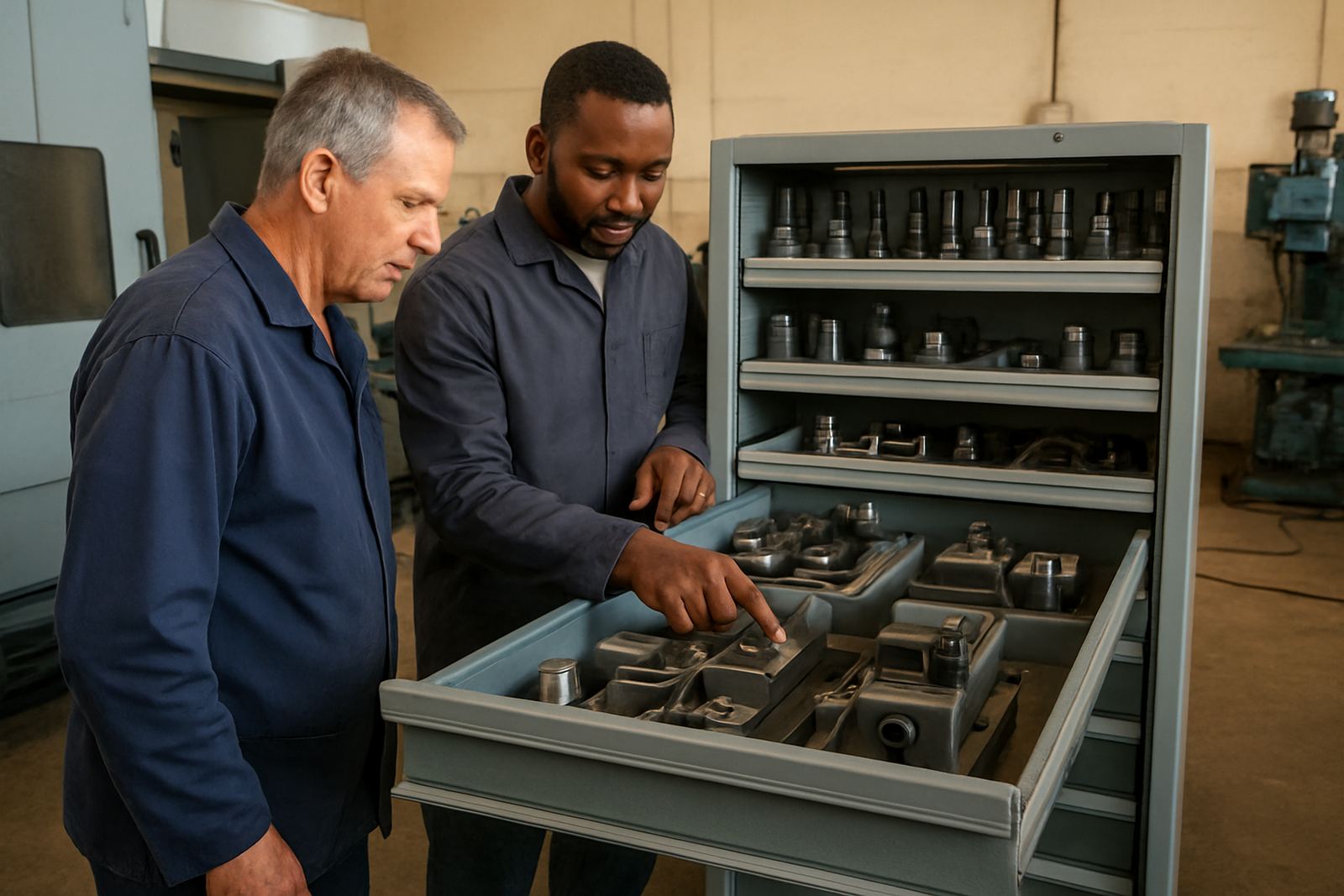
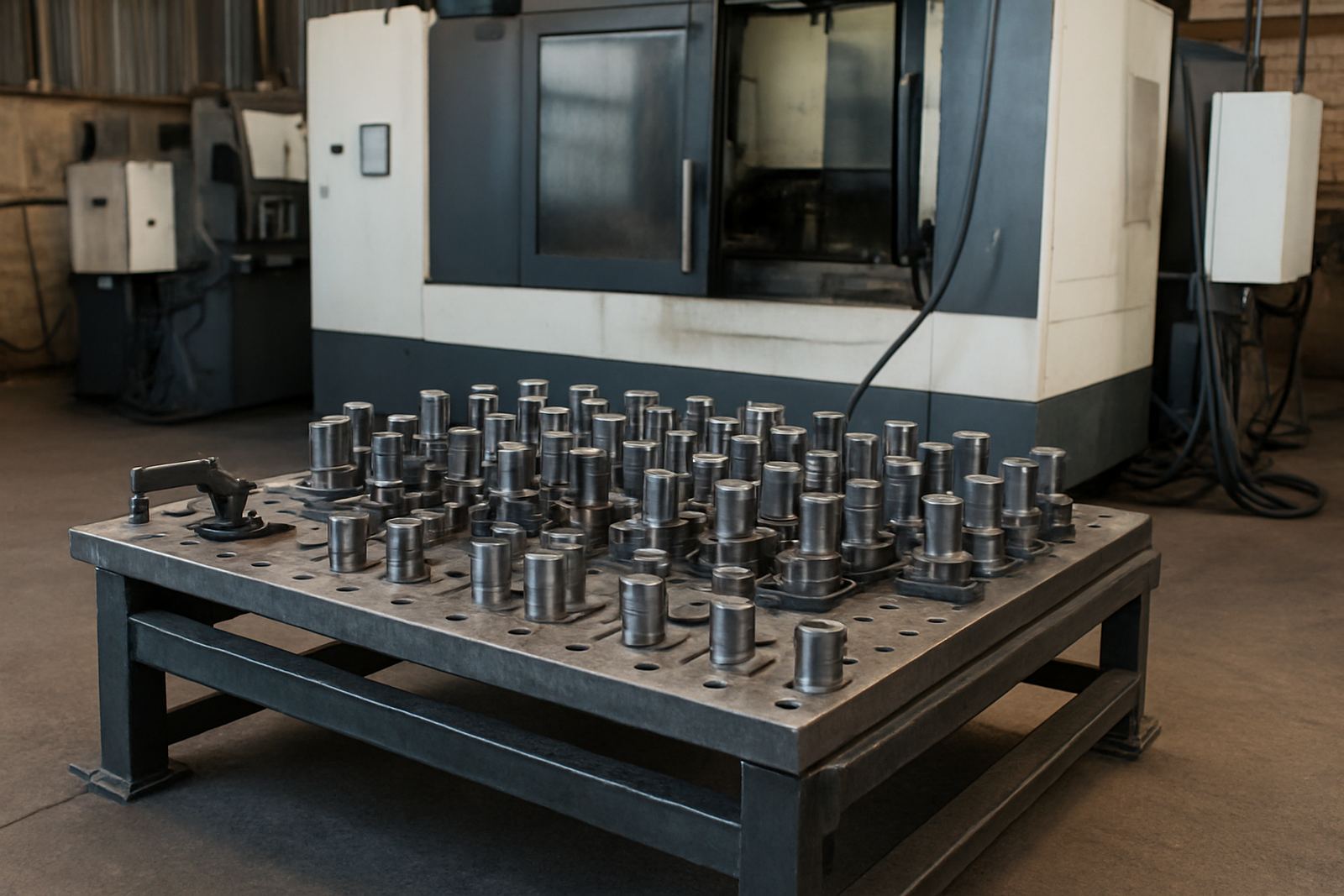
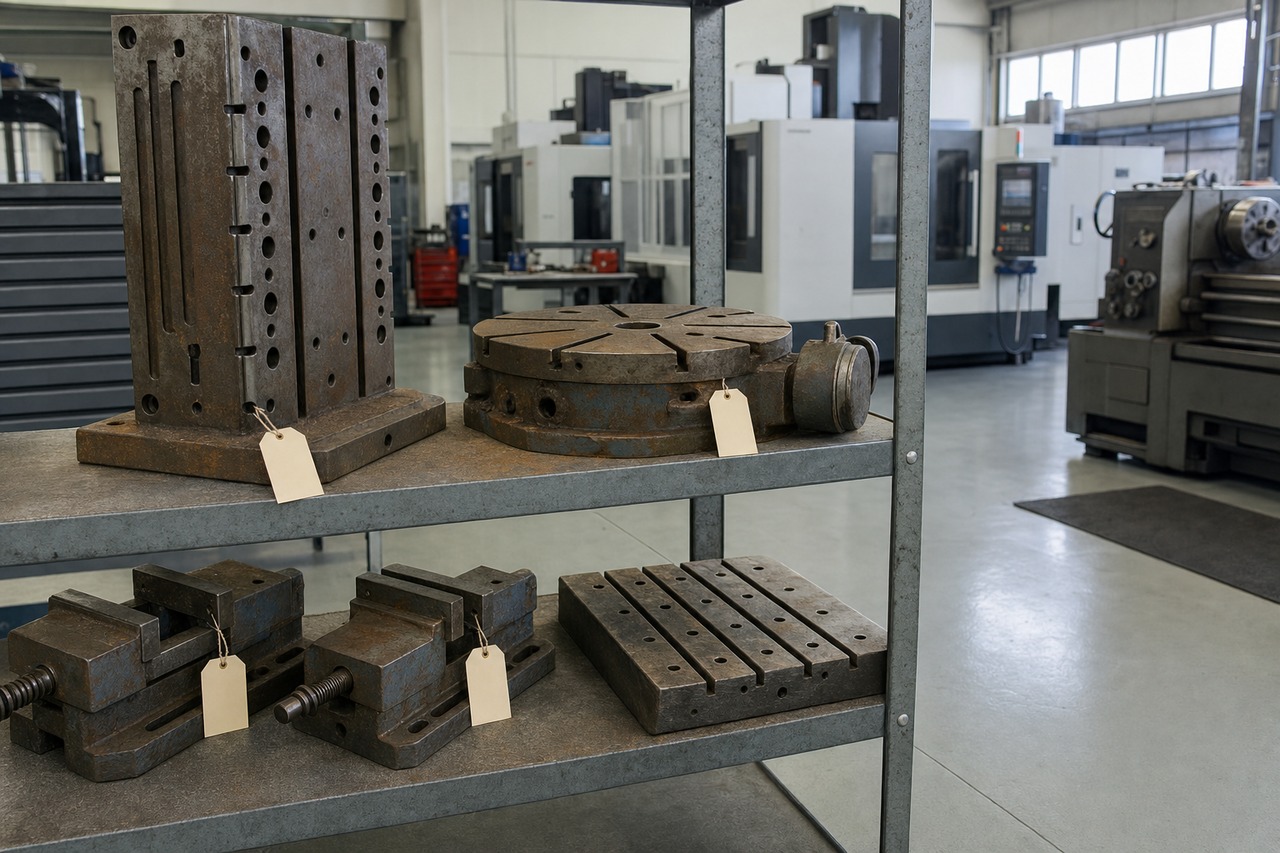
Most of the work is workholding: fixture plates, vises (including self-centring vises), tombstone fixtures and rotary tables. Old jigs and fixtures that come back after years on a shelf go through the same steps.
Safety in our toolroom
The RustOff system is a Class 4 laser, licensed by SAHPRA in South Africa. We clean in a screened corner, everyone nearby wears the right laser safety glasses, and we run fume extraction while cleaning. The operation guide video walks through the touchscreen interface, and the introduction video shows the cleaner working on rusted metal. Install and repair work on these machines is shown on machinery.support, and the other power sizes are on the fibre laser cleaning system page.
Where rebuilds are cleaned
Rusty workholding for rebuild goes through our Struandale branch, where vise alignment and chuck jaw work are already done. A photo of the part and the machine it runs on is enough for the toolroom to say whether a clean and check is enough, or whether it needs a full rebuild.
At a glance
| Where | Toolroom, Struandale, Gqeberha |
|---|---|
| Cleaner | RustOff-Original LR-PORTABLE/300, 300W pulsed fibre laser |
| Supplier | AM.CO.ZA |
| Power and air | 220V, 6 bar compressed air |
| Scan area | About 110 x 110 mm per pass |
| Typical parts | Fixture plates, vises, tombstones, rotary tables, old jigs |