What a tombstone fixture does on a horizontal machine
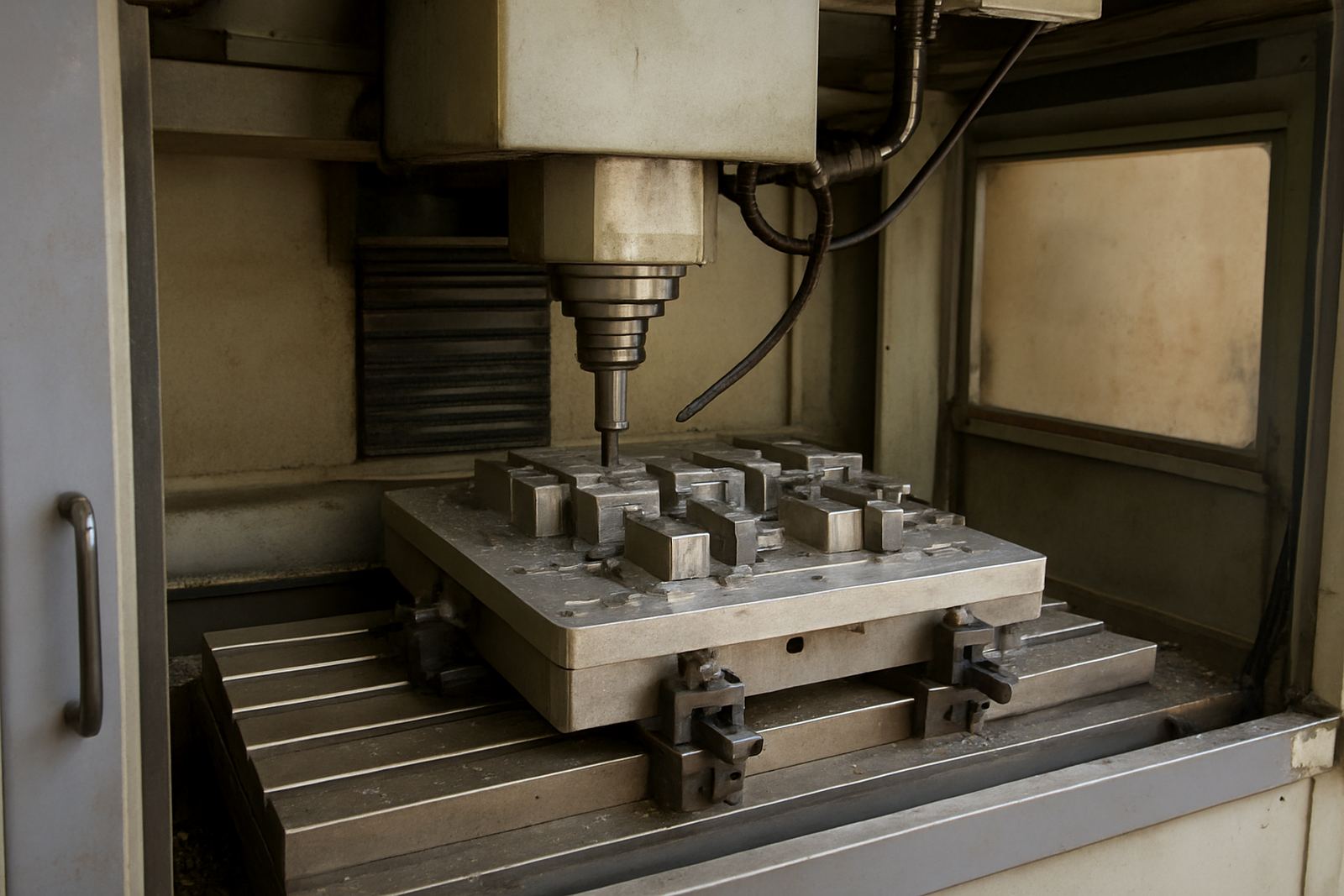
A tombstone fixture is a tall workholding base with several machined faces, so you can mount parts on more than one side and keep the spindle working instead of sitting idle. On a horizontal machining centre, that matters because you can load one tombstone and process a batch of components in sequence, which cuts handling and helps keep cycle time under control.
For local shops in Gqeberha, Kariega, Despatch and Coega, this is useful on repeat work where the same part comes back every week or month. Instead of moving each piece from machine to machine, the job stays on one fixture, with good access for drilling, milling, tapping and boring. If you are running long shifts or working around load-shedding windows, fewer setups can make planning much easier.
Common sizes, face layouts and mounting options
Tombstones are usually specified by overall height, base footprint and the number of usable faces. The right size depends on your machine envelope, pallet size, component height, and whether you need clear chip flow between stations. We can supply layouts for light to medium production as well as heavier workholding for castings and machined plate parts.
- Base sizes commonly suit pallet footprints from 400 x 400 mm up to 630 x 630 mm
- Overall heights often range from 300 mm to 900 mm
- Face counts can be 2, 4, 6 or more depending on the job and access required
- Faces can be drilled and tapped to suit fixtures, vice jaws, clamps or custom locators
- Bore patterns, dowel holes and keyways can be added for repeat location
In practice, the best setup is the one that lets you load safely, reach all critical features, and still leave enough room for tool clearance. A fixture that is too tall can cause trouble with tool reach, while one that is too small may not give you enough stations for sensible part loading.
Where tombstones suit best in South African production
Tombstone fixtures suit shops that machine multiple small to medium parts from aluminium, mild steel, stainless steel and similar materials. They are often used in automotive supply, general engineering, pump components, brackets, housings and repeat contract work. If the same part is made in batches of 4, 8, 12 or more, a tombstone can help keep the horizontal machine working at a steadier rate.
They are also helpful where labour is tight or where you want to reduce manual repositioning. A well-planned tombstone can allow one operator to load the next batch while the machine completes the current cycle. That is a practical benefit in busy shops in Markman and Struandale, where floor space, turnaround and machine utilisation all matter.
- Batch production with repeated part numbers
- Multi-side machining in one setup
- Jobs that need consistent face-to-face location
- Work where chip control and tool access are important
- Production that needs reduced handling between operations
Installation, air and power requirements
Most tombstone fixtures are mechanical workholding structures and do not need electrical power themselves. The machine table, pallet interface and clamping system must however match the horizontal machining centre. If pneumatic or hydraulic clamping is included, you will need the correct air pressure or hydraulic supply as specified for the job. Always allow for safe access to the clamping points and enough clearance for part loading, especially when working with heavier components.
Before installation, check table flatness, pallet location, and whether the machine can handle the combined weight of the tombstone, workpieces and fixtures. A large setup can affect acceleration and tool reach, so the machine builder's limits should be followed. In coastal areas such as Gqeberha, regular cleaning also helps prevent fine corrosion on exposed clamping surfaces, because salt air can work into the small places fast.
- Confirm pallet or table interface size before ordering
- Check max machine load and safe working height
- Allow for tool clearance on all machined faces
- Verify compressed air or hydraulic needs if clamping is powered
- Plan lifting access for installation and repositioning
Care, inspection and servicing that keep setups accurate
Tombstones work best when the locating faces stay square, clean and free of burrs. Chips, coolant residue and small knocks can all affect repeatability. A quick wipe-down after changeover goes a long way, and a regular inspection schedule helps catch wear before it becomes a scrap issue. If the fixture has threaded holes or fitted locators, check them for damage and make sure fasteners are torqued evenly.
Tooling supports related shop services that keep machining accurate, including tool inspection, holder cleaning, runout checks, presetting service, chuck jaw machining and vise alignment. That is useful when a tombstone setup is being used for close tolerance work, because the fixture is only one part of the total accuracy chain. If the machine, holders and clamping are out by a little, the whole job can drift.
- Inspect faces for wear, dent marks and swarf build-up
- Check squareness after any heavy impact or crash
- Replace worn screws, dowels and clamps before they loosen up
- Keep coolant channels and chip paths open
- Store unused fixtures in a dry area to prevent surface rust
What to check before you order a tombstone
To specify the right tombstone, start with the machine model, pallet size and the largest workpiece you want to mount. Then look at the number of parts per cycle, the material being cut, and the cutting forces involved. A light aluminium job will not need the same mass or face arrangement as a steel bracket with heavy interrupted cuts.
It also helps to know how the shop handles loading. If the operator uses a hoist, forklift or manual handling, that affects the safe size and weight of the fixture. Send through the drawing, the machining sequence, hole pattern, and any special location points. If the job uses a scanner or needs verification, we can help match the fixture layout to the inspection process as well. Small changes at the ordering stage can save a lot of rework later, so it is worth getting the details right from the start.
- Machine type, pallet size and T-slot or interface details
- Part drawing with critical dimensions and clamp zones
- Material type and estimated cutting loads
- Required number of faces and parts per load
- Loading method, lifting limits and floor space available
- Any need for custom drilled patterns, locators or powered clamping
Key facts
| Product type | Multi-face tombstone fixture for horizontal machining centres |
|---|---|
| Typical face options | 2, 4, 6 or custom face layouts |
| Common size range | Approx. 300 mm to 900 mm overall height |
| Mounting | Pallet or table mounted with drilled, tapped and located interfaces |
| Materials | Typically supplied in steel or cast base construction, depending on application |
| Support services | Presetting, runout checks, holder cleaning, inspection and alignment services |