Why taps break, even on a good machine
A tap is the one cutter in the magazine that has to stop dead at the bottom of the hole, reverse and come back out along exactly the same helix. If the spindle and the Z axis are even slightly out of step at that moment, the tap gets pushed or pulled along its length. In aluminium you might only see a thread that gauges loose. In steel, stainless or cast iron it shows up as torn threads, chipped tap teeth and, sooner or later, a broken tap stuck in a part that already has an hour of machining in it.
Most modern machining centres have rigid tapping, and that solves a lot. It does not solve everything. Servo lag, worn ballscrews on an older machine and the sudden reversal on blind holes all leave a small mismatch. A holder made for tapping absorbs that mismatch instead of passing it into the tap. For shops in Struandale and Markman doing repeat work on valve bodies, pump housings and brackets, that is often the cheapest fix for a broken-tap problem.
The holder types we supply
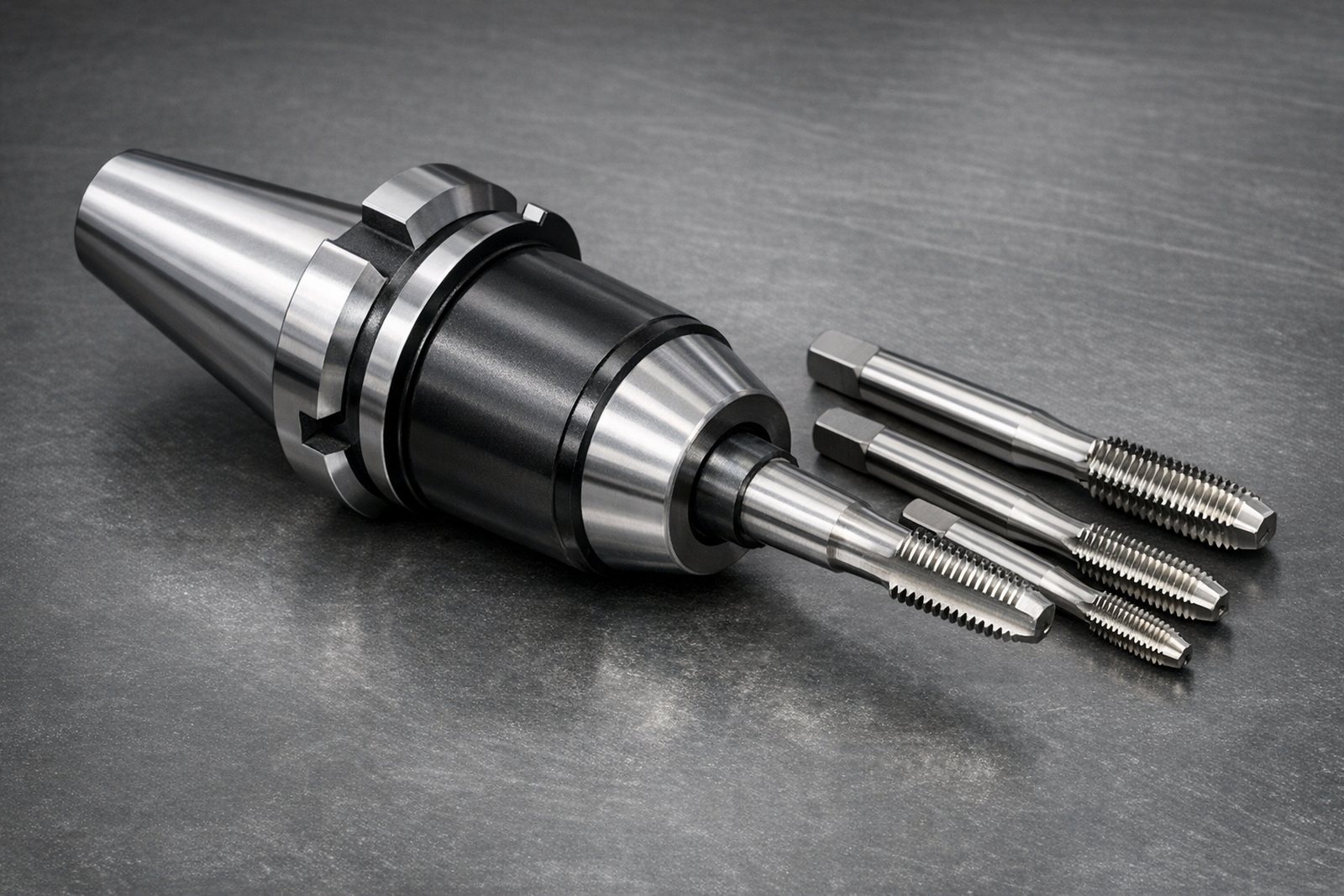
- Synchro tapping holdersFor machines with rigid tapping. A small built-in axial float, usually a fraction of a millimetre, takes up sync error on entry and reversal. Better thread gauging and longer tap life in steel and stainless.
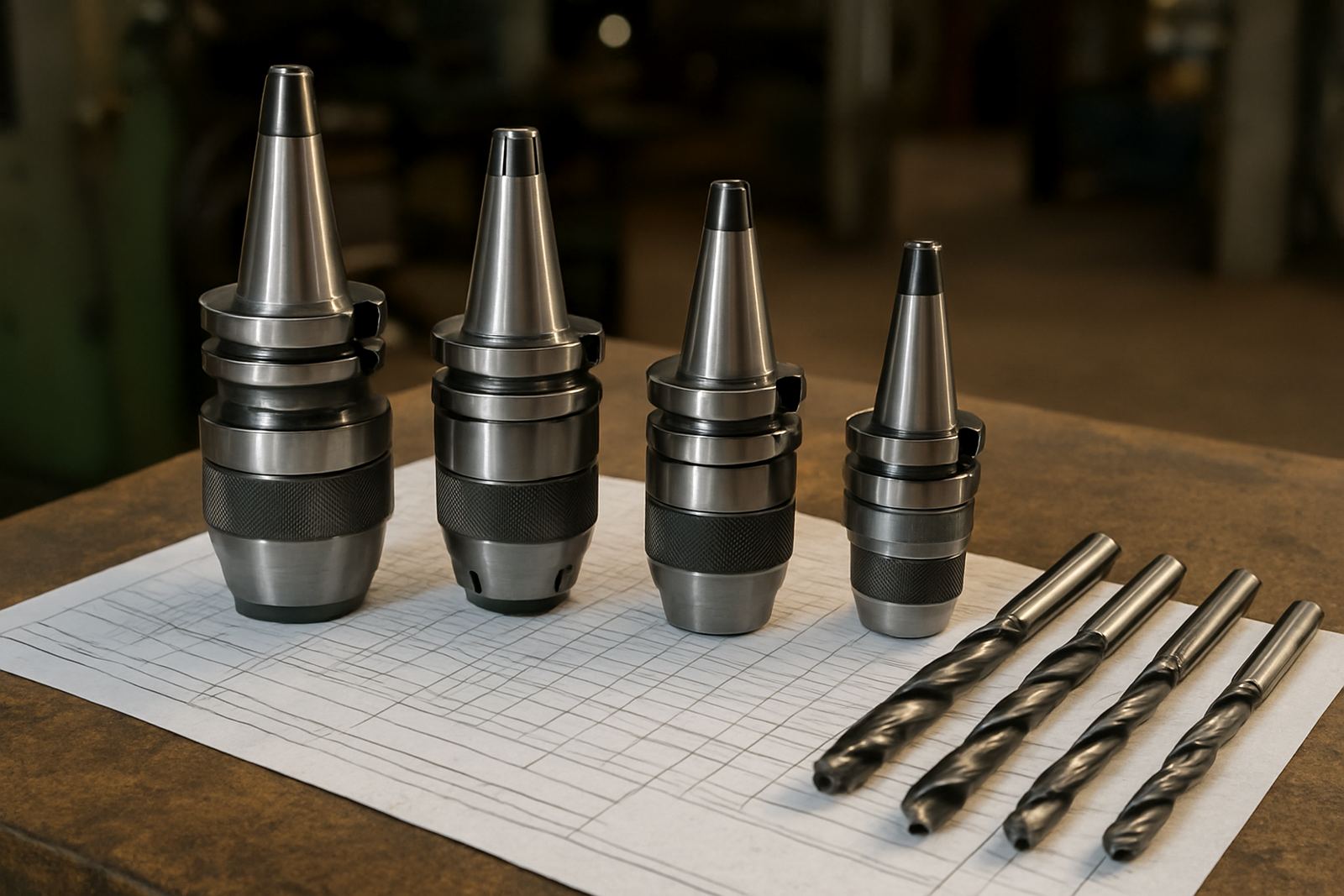
- Tension-compression chucksSeveral millimetres of float in and out, for older CNCs, drilling machines and lathe work where feed and spindle are not locked together. The tap finds its own pitch.
- Torque-limiting adaptersQuick-change adapters with a clutch that slips when torque goes over the set value. Worth it on small taps in blind holes, where one broken M4 can scrap the part.
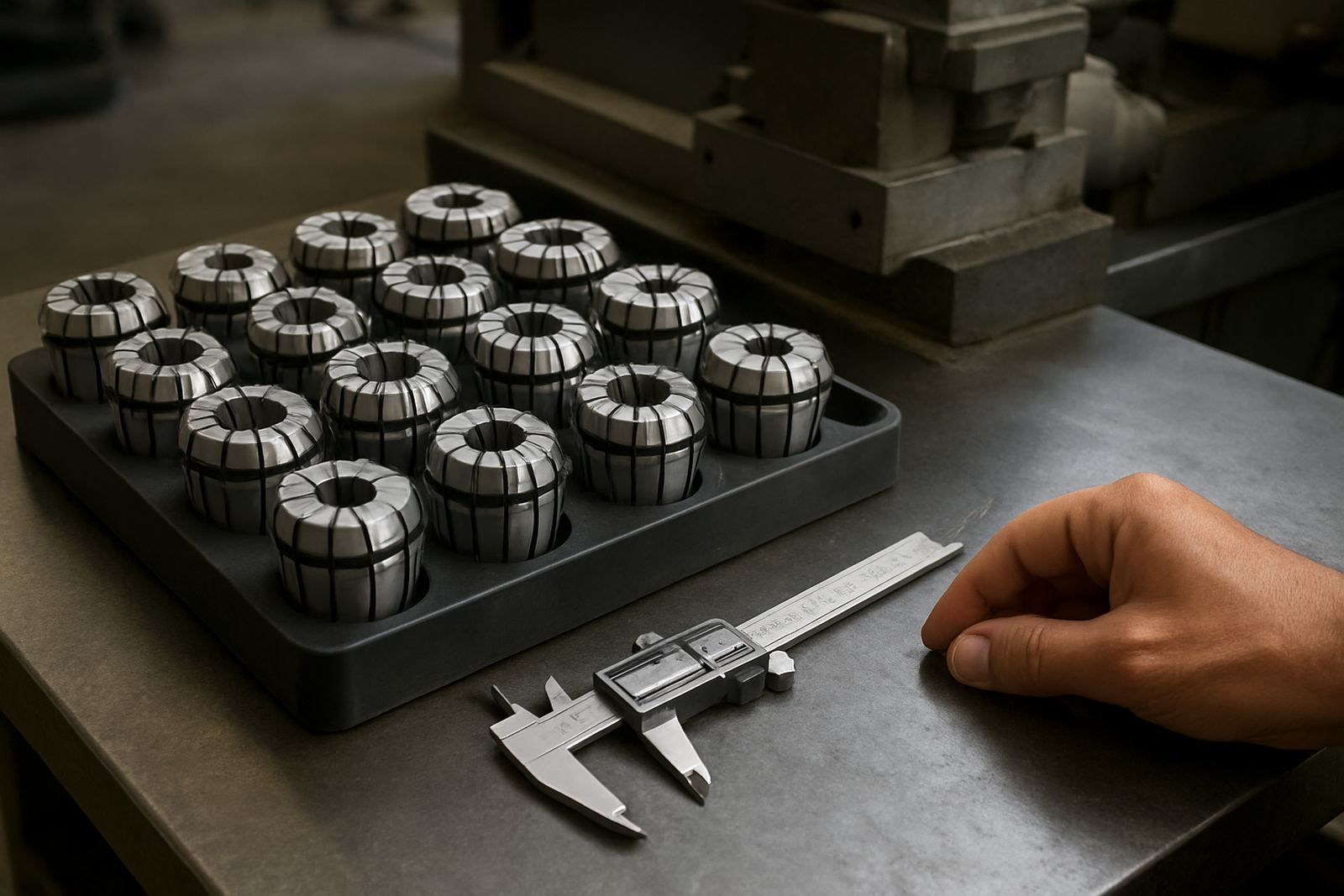
- ER tapping colletsER collets with a square drive that grip the tap shank and stop it spinning. A simple upgrade if you already run ER collets and collet chucks.
Holders are available for the common spindle interfaces, including BT30, BT40, SK40 to DIN 69871 and HSK-A63, plus straight-shank versions for lathes with driven tools. Quick-change systems are usually sized in two ranges, one for small to medium taps and one for medium to large, so a single holder body covers most of what a general machine shop taps in a week. Through-coolant versions are available for coolant-fed taps, which helps a lot with chip evacuation in deep blind holes.
Matching the holder to the job
We start with the machine and the thread, not the holder. Before quoting we ask for:
- Machine make and model, spindle taper and whether rigid tapping is active and working
- Tap sizes and shank standard (DIN or ISO), and whether you use spiral flute, spiral point or forming taps
- Material, hole depth and whether the holes are blind or through
- Coolant type and whether the taps are coolant-fed
- Tool length limits in the magazine and clearance around fixtures or vises
Forming taps need more torque than cutting taps of the same size, so they change which clutch setting makes sense. Blind holes in stainless need different thinking to through holes in aluminium. A short phone call or a few photos of the current setup usually tells us more than a part number does.
Setting up and running it right
Fit the tap so the square sits fully in the drive and the shank is clean. Dirt in the collet or adapter is the most common reason a tapping holder seems not to work. On a synchro holder, program the feed to exactly match the pitch at the spindle speed, then let the holder take care of the small error that is left. Don't add extra float in the program to make up for it.
Torque-limiting adapters should be set for the tap size and material, not cranked up because one tap slipped. If an adapter keeps slipping, the usual causes are a drill hole that is too small, chips packing in a blind hole or a blunt tap. Fix those first. We check holders, collets and adapters for runout and wear as part of our runout checks, and can preset tapping assemblies along with the rest of your tools.
When a power cut stops the machine with a tap still in the hole, resist the urge to just home the machine. Reverse the tap out slowly at low speed first, or back it out by hand if the controller allows, and look at it before putting it back into the cycle. Plenty of taps that break on the next part were actually damaged at the restart.
Care and service life
A tapping holder has moving parts inside, so it needs a bit more care than a solid holder. Blow out chips after a shift, wipe the body and keep it out of coolant puddles on the bench. Coastal air in Gqeberha and Port Alfred is hard on steel left damp overnight, so a light oil film before storage is worth the minute it takes. If the float feels gritty, sticky or uneven, send it in rather than forcing it, because a holder that no longer floats freely is just a solid holder that costs more.
Spare adapters and tapping collets are worth keeping for the sizes you use most. That way a worn collet or a slipped clutch does not stop a job that has to go out the same day.
Key facts
| Product type | Tapping holders, tension-compression chucks, torque-limiting adapters and tapping collets |
|---|---|
| Typical applications | Tapping on CNC machining centres, lathes with driven tools and drilling machines |
| Interfaces | BT30, BT40, SK40 (DIN 69871), HSK-A63 and straight shank |
| Compensation | Minimal axial float for rigid tapping, or longer tension-compression float for non-synchronised machines |
| Coolant | Through-coolant versions available for coolant-fed taps |
| Power or gas | Not required, the holder works mechanically |
| Service support | Inspection, cleaning, runout checks and presetting of tapping assemblies |