What a drill chuck does in day to day machining
A drill chuck clamps the shank of a drill bit so the machine can rotate it without slippage. In practical terms, it is the part that turns a drill press, pillar drill, milling machine or handheld machine into a usable drilling setup. For light machining work, the right chuck also helps with tapping, spot drilling and deburring where low runout matters.
Tooling supplies drill chucks for South African machine shops that work with steel, stainless, aluminium and plastics. In a busy shop, the difference between a tired chuck and a well matched one shows up fast in hole size consistency, finish and tool life. If you are running a small fabrication floor in Gqeberha or a larger plant in Coega, the chuck needs to suit the spindle, the bit range and the job.
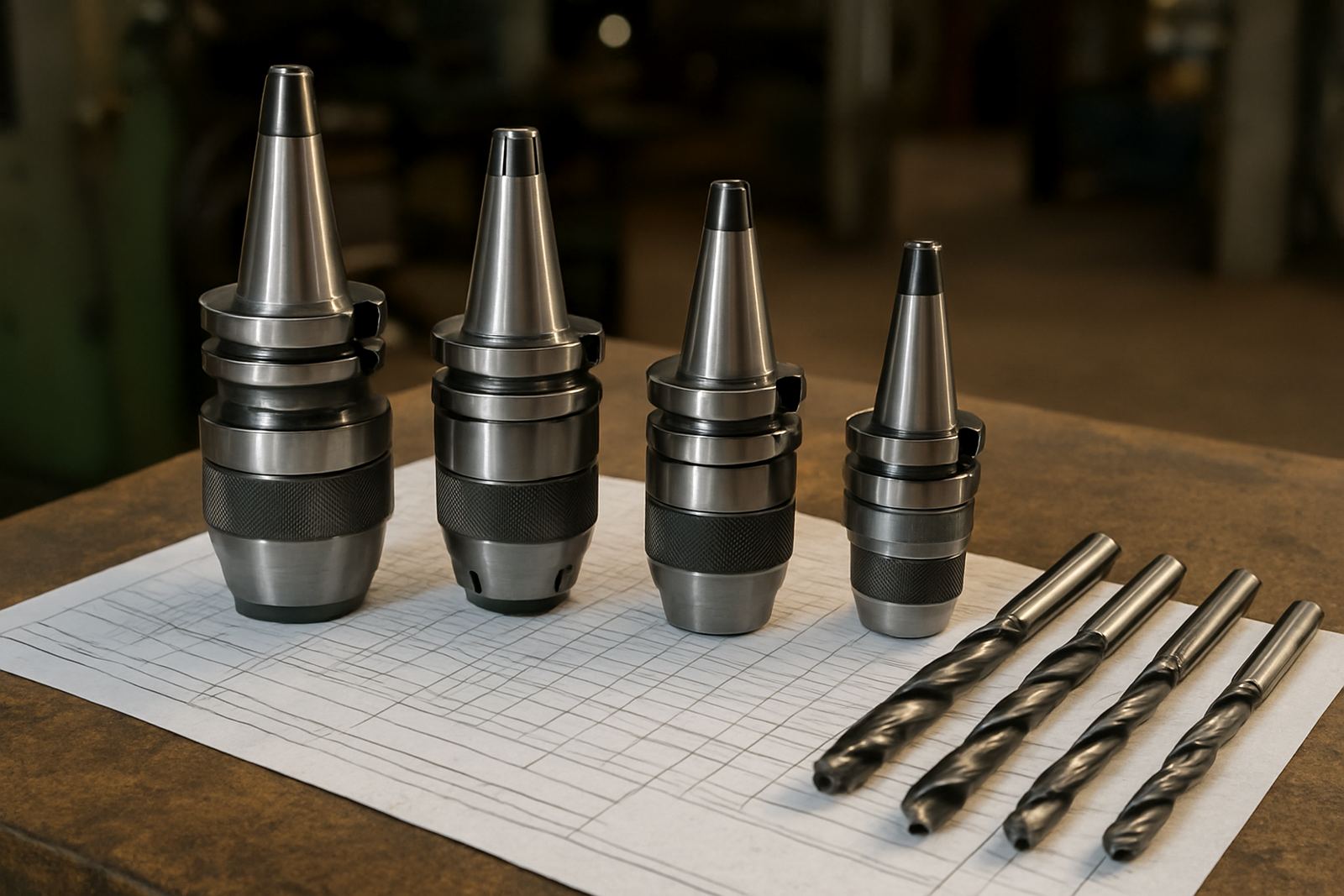
Our range covers keyed and keyless styles, with models suited to standard drilling and light duty production work. For most workshops, the main choice is between fast hand tightening and the extra grip a keyed chuck gives under heavier feed pressure.
Keyed or keyless: choosing the right grip
Keyless drill chucks are popular where operators change bits often and need quick adjustment by hand. They suit general workshop drilling, maintenance work and light machining where speed matters. Keyed drill chucks use a chuck key to tighten the jaws, which gives firmer clamping on repeated drilling jobs and when vibration is part of the process.
- Keyless chucks: faster bit changes, easier for regular changeovers, practical for mixed jobs.
- Keyed chucks: stronger jaw lock, better for heavier drilling, more suitable when the operator wants added security.
- Short body designs: useful where clearance is limited on compact machines.
- Extended reach designs: helpful when extra access is needed around fixtures or guards.
If your team works shifts or multiple operators use the same machine, a keyed chuck can reduce the chance of bit slip. If the machine is used for maintenance and repair across different departments, keyless may be the simpler choice. We can help match the chuck to the spindle taper or mounting type you are already using.
Sizes, capacities and mounting options
Drill chucks are selected by jaw capacity, mounting style and the spindle they must fit. Common capacities include 1 to 10 mm, 1 to 13 mm and larger industrial sizes depending on the application. The key point is that the chuck capacity should match the largest shank size you plan to use, while still gripping smaller bits securely.
Most workshops ask for one of these mounting styles:
- Direct taper mount for machine spindles
- Threaded mount for compatible holders and portable machines
- Jacobs style taper fit for general workshop equipment
- Arbor mounted chucks for milling and drilling machines
For CNC and production environments, always check the spindle interface before ordering. A chuck that looks correct can still be wrong if the taper size, thread pitch or arbor length does not match the machine. In humid coastal conditions around Gqeberha, a tight fit is important because light corrosion can make removal and refitting harder if the chuck is left dirty.
Where these chucks suit best in South African workshops
Drill chucks are used across machine shops, fabrication yards, maintenance departments and tool rooms. They suit pillar drills, drill presses, small lathes, manual milling machines and some portable drilling equipment. In shops handling batch work, a good chuck supports repeatable drilling for brackets, plates, housings and fixture parts.
They are also useful where precision matters but the job is not full toolroom work. For example, a maintenance crew in Despatch may use a keyless chuck for fast repairs, while a fitter in Markman may prefer a keyed chuck for repetitive drilling into tougher material. In both cases, the chuck should hold true and not add unnecessary wobble to the operation.
- General engineering workshops
- Fabrication and maintenance teams
- Tool rooms and jobbing shops
- Light production and prototype work
For shops affected by load-shedding, it helps to have the chuck ready on the machine that is most often used during short power windows. Less time spent changing tooling means more actual output during the shift.
Fitment, installation and machine requirements
Most drill chucks do not need special power or gas supply. They are mechanical clamping devices, so the main requirement is correct fitment to the machine spindle or holder. Installation should be clean and firm, with no swarf on the taper surfaces and no oil film where a dry taper fit is required.
When fitting a chuck, the operator should check the spindle nose, taper size and any retaining screw arrangement if fitted. A badly fitted chuck can pull off under load or run out of true. On portable machines, make sure the chuck is tightened fully before use and inspected regularly if the tool is moved between sites in Gqeberha, Kariega or Coega.
We also recommend checking clearance around guards and workholding. Some larger chucks can interfere with vises, fixtures or machine guards if the body length is too long. If your application needs extra reach, tell us the machine type and the bit sizes you use most often.
Care, servicing and signs it is time to replace
Like any working component, drill chucks need routine care. Keep the jaws clean, remove swarf after each job and avoid forcing damaged bits into the jaws. A light wipe down after use helps in coastal areas where moisture can build up quickly and leave surfaces sticky or rusty.
Tooling also provides related servicing support for workshops that want to keep equipment in good order. That can include holder cleaning, runout checks, tool inspection and presetting support. If a chuck starts slipping under normal drilling pressure, has visible jaw wear or does not close evenly, it should be checked before it affects hole quality.
- Clean the jaws regularly and keep chips out of the mechanism
- Check for runout if holes are drifting off size
- Replace worn jaws or a damaged body rather than over tightening
- Store spare chucks dry, especially near the coast
With correct care, a decent chuck should give long service, but once the grip becomes inconsistent it is usually more cost effective to replace it than keep fighting the fault.
What to confirm before you order from Tooling
Before placing an order, confirm the machine type, spindle interface, chuck capacity and whether you need keyed or keyless operation. It also helps to know the typical drill bit shank sizes, the material being drilled and whether the chuck will be used for hand drilling or on a machine. If you are not sure, send a photo of the spindle and the existing holder, and our team can advise on the match.
Customers in Struandale, Port Elizabeth CBD, Despatch, Kariega, Markman and Coega can arrange collection and delivery through our local support. Nationwide machine shops also rely on us for practical supply and after sales help, including service coordination and application advice. If your line needs quick changeovers or tighter control over concentricity, tell us up front so we can recommend the right style.
Drill chucks are small parts, but the wrong one can slow a whole bay of machines. Getting the size, mounting and grip right from the start saves time on rework and keeps drilling accurate from the first hole to the last.
Key facts
| Product type | Drill chucks for drilling and light machining |
|---|---|
| Options | Keyed and keyless |
| Common capacities | 1 to 10 mm, 1 to 13 mm, and larger industrial sizes |
| Mounting | Taper, threaded or arbor mounted depending on machine |
| Typical use | Drill presses, pillar drills, milling machines and handheld machines |
| Support | Fitment advice, collection and delivery, local service support from Struandale, Gqeberha |