Why Tombstone Planning Matters on a Busy Shop Floor
Tombstone planning is not only about fitting parts onto a fixture block. It is about deciding how many faces can be machined in one cycle, how the operator will load and unload, and how much idle spindle time can be removed between operations. When a part needs drilling, tapping, side milling and a final skim cut, a poor setup forces the job to bounce between vises and machines. That adds handling, inspection time and risk.
In a Gqeberha workshop that runs mixed work for automotive, general engineering and maintenance, the best tombstone is usually the one that matches the part family. A good setup keeps the machine cutting while the operator prepares the next batch. It also makes it easier to repeat work after a load-shedding stop, because each face has a defined location and a known tool path. The result is steadier output and fewer surprises at the end of the shift.
For shops in Struandale, Markman and Coega, the practical aim is simple: put as many valid operations as possible into one clamping, without making tool access, chip evacuation or part checking harder than it needs to be.
Start With the Part Family, Not the Fixture
Before choosing a tombstone, group parts by size, access and tolerance. A family of brackets with similar hole patterns may suit a four sided tombstone. A deeper housing might need a taller block with extra clearance for side cutters or probing. Do not design around the biggest job only, because that often leaves smaller parts floating in unnecessary space.
Check the following points before anything is machined:
- How many faces need machining, and on which machine axes.
- Which features need first op and second op access in one cycle.
- Whether the part can be top loaded or side loaded by one operator.
- How much clamp force is needed without distorting thin walls.
- Where swarf will fall, and if coolant will clear the cavity.
If the part has cast or flame cut surfaces, allow for extra pick up in the first operation. If the work is sensitive to heat or clamp marks, plan soft jaws or custom pads early. A tombstone should reduce variation, not move it into the final inspection room.
Face Layout Rules That Keep the Spindle Busy
The most efficient tombstones are laid out with the cutter in mind. Tool reach, fixture height and adjacent part clearance all affect cycle time. A cutter that must slow down because the next part is too close wastes machine capacity. Likewise, if the spindle has to travel too far between operations, the job spends too much time moving and not enough time cutting.
Keep tool access simple. Faces that need drilling, tapping and profiling should be positioned so the common tools can reach them without awkward extensions. Avoid placing tall features where they will shadow the cutter. Where possible, orient the most time consuming cuts toward the machine front, so the operator can see chips building up and spot a problem early.
There is also value in standardising face order. If every job on a similar tombstone uses the same first face, second face and final face sequence, setups become quicker and programming is easier to trust. That saves minutes on every batch, which adds up over a month.
- Keep the tallest features away from the next face to avoid collision risk.
- Leave room for probes, drills and tapping heads, not just end mills.
- Design for chip flow, especially on aluminium and long stringy steels.
- Use repeatable datums so the part seats the same way after a changeover.
Holding the Part Firmly Without Distortion
Multi-face machining only works when the first clamping is stable. If the part moves even slightly, every later face picks up that error. That is why workholding choice matters as much as the tombstone itself. A rigid vice jaw, a custom stop or a small fixture plate can each be the right answer, depending on the component and the material.
For smaller production runs, it is often worth machining a locator pocket or a nest into the tombstone face. That gives faster loading and better repeatability. For high volume work, quick acting clamping can reduce manual handling, but it must still allow proper torque and safe part retention. In coastal conditions around Gqeberha, keep an eye on corrosion too. Bare steel fixtures can pick up surface rust quickly if the shop is humid and parts are not cleaned after coolant use.
Do a runout check on the setup before the first production cut. If the jaws, pins or stop faces are off, the whole batch can drift. A few microns saved here may sound small, but in precision machining it is often the difference between a clean pass and a rejected batch.
Programming for Fewer Stops and Better Utilisation
A tombstone that is physically sound can still underperform if the program is arranged badly. Group operations by tool wherever practical. If one cutter can face all four sides, use that tool path before changing to drills or thread tools. Keep probing cycles in logical places so the machine confirms position before critical operations, not after problems have already started.
Think about total spindle utilisation, not just cutting time. If the machine waits while the operator clears chips or checks clamps between every face, the gain is reduced. A better plan is to combine operations, finish all possible work on one face, then move to the next with minimum interruption. On a busy line, that can add an extra part or two per shift, which matters when electricity, labour and transport costs keep climbing.
For shops in Kariega or Despatch supplying parts into Gqeberha, the best program also leaves room for a quick restart after a power interruption. Clear naming, saved offsets and a known loading sequence help the team get back to cutting faster.
A Local Example from the Eastern Cape
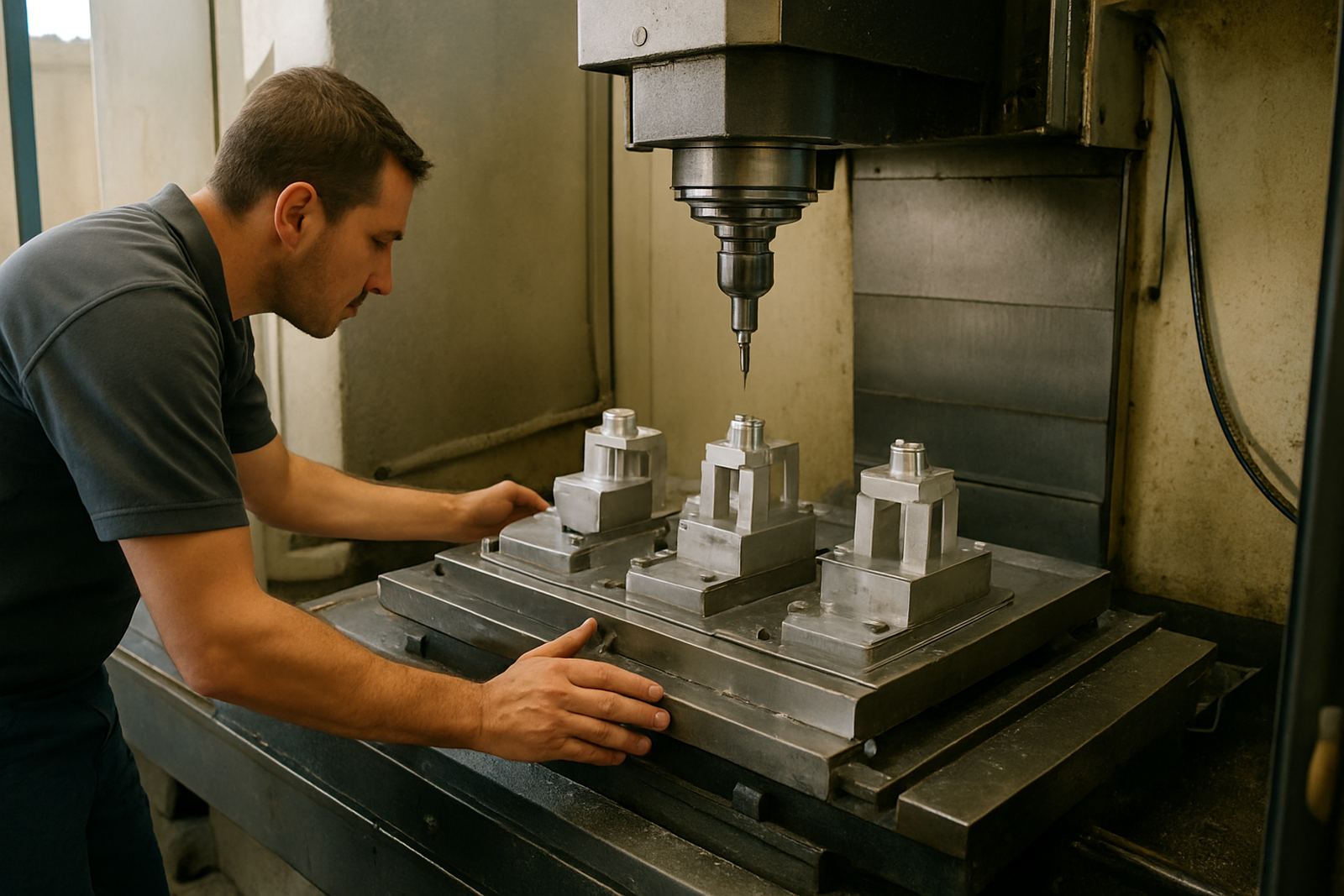
Consider a small machine shop in Coega making steel brackets and spacer blocks for a nearby assembly customer. The parts need drilling on four faces, a tapped hole on one side and a final deburr. If each face is done in a separate setup, the operator handles the part four times and the machine sits idle between operations. By moving to a compact tombstone with two parts per face, the shop can complete more work per clamp and free up a second machine for other jobs.
The real gain was not only speed. The shop also cut variation because each part seated against the same reference points. Inspection became simpler and the team could collect dimensional data face by face. With collection and delivery running between Struandale, Markman and the Port Elizabeth CBD, the planning saved enough time to keep dispatchs more predictable too.
- One loading method for the whole batch.
- One clamp routine that operators can repeat.
- One inspection sequence that matches the machine order.
- One fixture layout that can be reused for the next call off.
Keep the Setup Serviceable, Not Just Clever
A tombstone should be easy to clean, inspect and reset. If chips pack into corners or coolant pools around clamp screws, the fixture becomes slow to maintain. That is why serviceability matters. Clean faces, accessible fasteners and clear datum marks make the difference when the job comes back after a holder cleaning or runout check. Shops that do presetting and alignment work regularly know that the simple things save the most time.
It also helps to build a short checklist for every changeover: confirm base alignment, inspect holder condition, check clamp pressure, verify the first part and keep one sample off the machine for comparison. In a market where shops often work across steel, aluminium and plastic on the same week, the fixture needs to be practical rather than overcomplicated. The best tombstone planning is the kind that the whole team can trust on a Monday morning after the weekend, even if the power went off twice.
When the fixture is planned properly, the machine spends more time cutting, the operator spends less time juggling parts and the customer gets steadier lead times. That is good machining, plain and simple.