What soft jaws do in everyday turning work
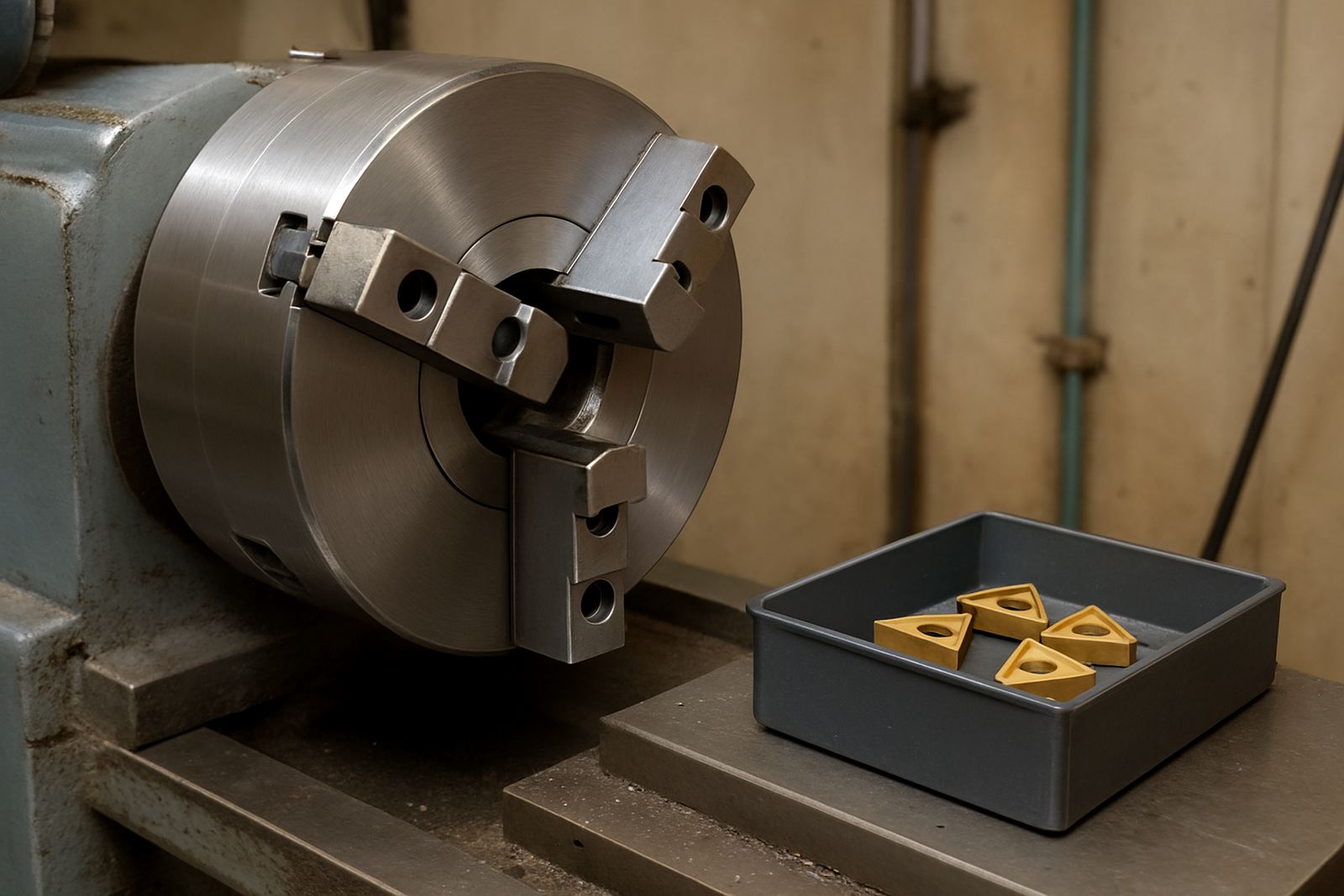
Soft jaws are machinable jaws fitted to a chuck so the gripping faces can be bored or profiled to suit a specific part. Instead of forcing every job to fit a standard serrated jaw, the machinist shapes the jaw to the component, which gives better contact and more reliable holding. That matters on repeat work, where a small shift can throw out concentricity or spoil a finish.
In a busy shop, especially where one machine handles jobbing work in the morning and repeat batches after lunch, soft jaws reduce changeover time. You machine the jaws once, then load the same part again and again with confidence. For components with short runs, stepped shoulders, thin walls or polished surfaces, that can be the difference between a job that stays profitable and one that becomes fiddly and slow.
They are used a lot in general engineering, agricultural repair, automotive parts, pump components and small production runs. If the part is round but not easy to clamp, soft jaws usually make the setup far more forgiving.
When machinable jaws are the better choice
Soft jaws make the most sense when you need repeatability, when the part must be held on a finished diameter, or when the geometry is awkward. They are also useful when the stock material is soft or easily marked, like aluminium or certain plastics. On a coastal site in Gqeberha, for example, a workshop making stainless fittings may need to protect finished faces while still keeping the part square under load.
They are especially handy for repeat parts because the jaw face can be bored in the same setting as the job. That means the gripping diameter and the machined diameter line up more accurately. If you are turning a batch of flanges, bushings or housings, the setup pays back quickly.
- Use them for finished or semi-finished parts that should not be marked.
- Use them where the part needs support over a larger contact area.
- Use them for repeat batches where setup time must stay low.
- Use them when the component has an odd shoulder, bore or thin wall.
If the workpiece is heavy or the cutting forces are high, soft jaws can still be suitable, but they must be machined correctly and checked before production starts. A poor jaw bore can pull the part off-centre and cause scrap. That is why proper inspection and runout checks matter so much.
Awkward shapes, better grip
Not every job is a neat cylinder. Some parts have casting irregularities, internal bores, interrupted faces or delicate sections that standard jaws struggle with. Soft jaws let the machinist create a custom pocket or step that supports the part where it is strongest. In many cases, this gives a safer grip than tightening harder on a standard jaw, which can distort the piece.
Think of a small pump housing coming through from a client in Coega. The outer form is uneven, the bore must stay true, and the part cannot be crushed. A machinable jaw can be bored to the housing's reference diameter, then faced so the component sits squarely and the turning process becomes more predictable. That saves rework and keeps the inspection table quieter.
There is also less need for packing, shimming or makeshift fixes. The job gets a proper home in the chuck, which reduces marking and improves the finish. In some cases, a soft jaw setup can even help with second-op work where the part must return to the machine in the same location.
How a good setup is prepared
A soft jaw is only as good as the setup behind it. Before machining the jaw faces, the chuck and mounting must be clean, seated properly and checked for damage. If the jaws are dirty or the chuck is worn, the bore you cut into the jaw will copy that error. It is a simple point, but it catches many shops out.
Once the jaws are fitted, the machinist usually closes them under a load similar to the real job, then machines the gripping face in place. That way the bore is true to the chuck position under clamping pressure. Presetting the tooling, checking tool overhang, and confirming tool height all help keep the setup stable.
- Clean the chuck and jaw mounting surfaces first.
- Check jaw condition before machining the gripping face.
- Machine the jaws while they are clamped as they will be in production.
- Measure the finished bore and verify runout before loading parts.
If the jaws need to be changed often, it is worth keeping dedicated sets for high-volume repeat jobs. That saves time and helps each job stay more consistent from batch to batch.
Common mistakes that waste time and parts
The biggest mistake is machining soft jaws too loosely, then clamping the workpiece harder than the jaw was set for. That can distort the contact face and move the part just enough to cause a scrap bearing seat or a poor finish. Another common issue is cutting too shallow a pocket, which leaves too little grip length.
Some shops also forget that jaw wear changes over time. After enough cycles, the bore may no longer match the original part. A quick inspection and re-bore can put things right, but only if someone is watching the wear. Runout checks should be part of the routine, not something done only when a customer complains.
If the component is short and heavy, or if the cut is interrupted, the setup needs extra care. On one of those windier Gqeberha days, a workshop in Struandale may already be dealing with power interruptions and a busy schedule so it is tempting to rush. That is usually when a jaw setup goes wrong and the whole batch suffers.
Why local shops keep coming back to them
For South African machine shops, soft jaws offer a practical balance between accuracy and speed. They suit small batches, repair work and repeat production where changeovers must stay manageable. They also help when labour, time and machine availability are all under pressure. A shop in Markman or Despatch can run a solid job, collect the parts, then bring them back later for a second operation without losing the location established in the chuck.
They also pair well with supporting services like holder cleaning, chuck jaw machining, vise alignment and presetting. When those basics are handled properly, the job spends less time being set up and more time being cut. That is what most shops need: less faffing, fewer errors and better use of the machine hours already paid for.
For turners working across Gqeberha, Kariega and Port Elizabeth CBD, the real value is simple. Soft jaws make difficult work easier to repeat, and repeat work is where profit often lives.