Why manual chuck care matters in daily production
A manual chuck often gets treated as a tough old workhorse, but it still needs proper attention. Dust, swarf, coolant residue, and dried oil build up fast in a shop, especially where machines run long shifts and the same chuck handles a mix of mild steel, stainless, and aluminium.
When that build-up is left alone, the jaws do not close evenly and the workpiece can sit slightly off centre. That shows up as extra runout, chatter, poor surface finish, and in some cases a job that has to be scrapped after a few extra operations. A quick cleaning routine, plus regular jaw checks, is far cheaper than chasing problems later.
For machine shops around Gqeberha and the wider Eastern Cape, this also matters because load-shedding and stop-start production can tempt teams to rush setup checks. That is usually when a missed chip under a jaw or a dry scroll plate causes the most trouble.
What to clean after every shift
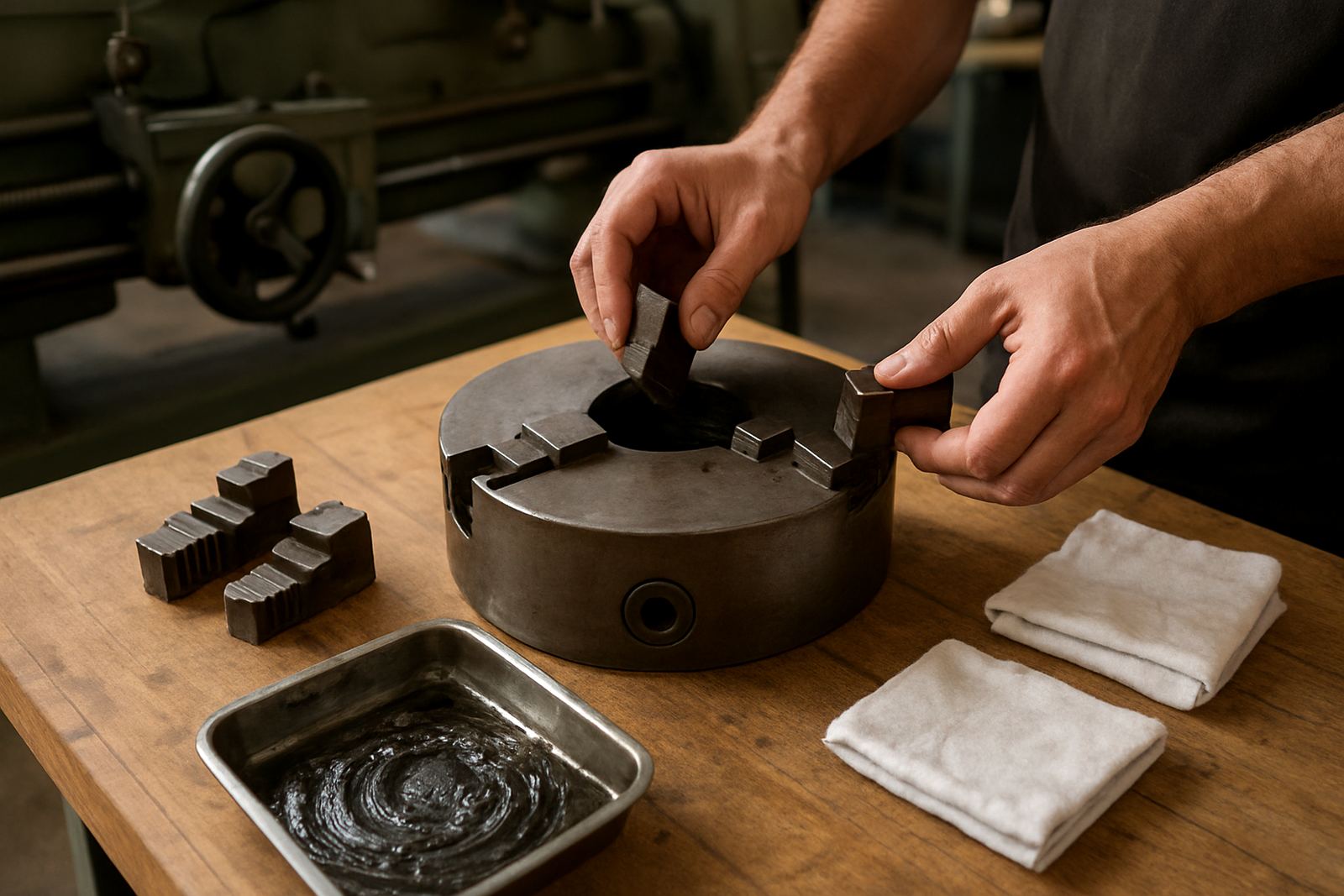
Manual chuck care starts with the basics. Before the next job goes on, remove loose swarf, wipe off coolant residue, and inspect the jaw seats, scroll area, and mounting face. The aim is not a full strip every day, it is to keep contamination out of the working surfaces.
A clean chuck turns more consistently and grips more evenly. If the chuck is on a lathe that sees cast iron, abrasive dust can pack into the moving parts and wear them quicker than expected. Coastal humidity around Port Elizabeth CBD and the harbour side also encourages surface rust if the chuck is left wet overnight.
- Brush out chips from the jaw slots and body recesses
- Wipe the chuck body and mounting face with a clean lint-free cloth
- Check for hardened swarf under the jaws
- Apply a light machine oil where needed, but do not overdo it
- Spin the chuck by hand and feel for stiffness or rough spots
If the chuck has been exposed to fine grit or sticky coolant, a deeper clean may be needed. In that case it is worth removing the jaws in sequence and cleaning the scroll area properly, not just the visible surfaces.
Checking jaw wear before it affects concentricity
Jaw wear does not always look dramatic. Often it shows up as inconsistent clamping pressure, marks on parts, or a job that measures fine on one end and out on the other. Soft jaws and hardened jaws both need checking, because wear can happen from repeated loading, over-tightening, or machining the same diameter over and over.
A practical workshop check is to close the jaws on a test bar or a known straight part and measure runout at more than one point. If the readings vary, inspect the jaw faces for step wear and look at how evenly the jaws meet. A chuck with one damaged jaw can sometimes still hold work, but it will not hold it predictably.
- Look for burrs, dents, and step marks on the gripping faces
- Check whether all jaws close together evenly
- Measure runout on a clean test bar at the front and further back
- Listen for scraping or tight spots when opening and closing
- Replace or machine worn jaws before they damage parts
On repetitive production runs, a small jaw error can multiply quickly. A component that is 0,05 mm out at setup can become a stack of rejected parts by the end of the day.
When to machine jaws, and when to replace them
Not every chuck problem calls for replacement. In many cases the jaws can be machined back to restore grip and concentricity, especially where the chuck body and scroll are still in good condition. This is common in busy workshops that carry out frequent changeovers and do not want a long machine stop.
Chuck jaw machining is most useful when the gripping faces are no longer true or when a special holding condition is needed for a repeat job. But if the jaws are cracked, badly worn, or no longer close evenly through their travel, replacement may be the better call. There is no point trying to save a set that cannot hold a part properly anymore.
It also helps to compare the cost of recovery against downtime. For a shop in Struandale or Markman, one hour lost on a machine may cost more than a proper repair, especially if a delivery commitment is already tight. The right decision is usually the one that gets the machine back into predictable work, not just the cheapest fix on paper.
A local example from a coastal production floor
A turning shop in the Gqeberha area recently had a recurring issue on a manual chuck used for small production batches. The machine was holding parts, but the team kept seeing slight variation after the first operation. They had already checked tooling and feed rates, yet the problem remained.
When the chuck was inspected, the cause was straightforward. Chips had packed into the jaw slots, one jaw face had a small burr, and the chuck had been left with coolant residue after a late shift. Once cleaned, checked for runout, and the jaw faces were corrected, the setup became consistent again. The shop did not need a major repair, just proper care and a quick reset of the basics.
That sort of issue is common in workshops in Despatch, Kariega and Coega where machines may handle mixed materials through the week. The environment is not extreme, but humidity, dust and production pressure all work against a chuck that is not maintained.
How Tooling supports chuck upkeep across the Eastern Cape
Manual chuck care becomes easier when the maintenance is done before the problems stack up. Tooling works with machine shops nationwide from Struandale, Gqeberha, helping with tool inspection, holder cleaning, runout checks, chuck jaw machining, and vise alignment. That means a workshop can keep the full setup in order, not just the chuck on its own.
For teams that do not have spare time for workshop admin, collection and delivery can also make a difference. A chuck or set of jaws can be assessed, corrected and returned without tying up the same staff member who needs to keep the machine running. That is useful when production windows are tight or the shop is working around municipal power interruptions.
- Tool regrinding for cutting tools that depend on accurate holding
- Presetting service for faster, cleaner setup changes
- Scanner calibration and printer maintenance for 3D operations
- Practical support for shops in Struandale, Markman, Coega, Kariega, Despatch and Port Elizabeth CBD
Good chuck care is not complicated. It is mostly discipline, a clean cloth, a steady eye, and knowing when a chuck needs proper attention instead of another hard turn on the tightening key.
},{