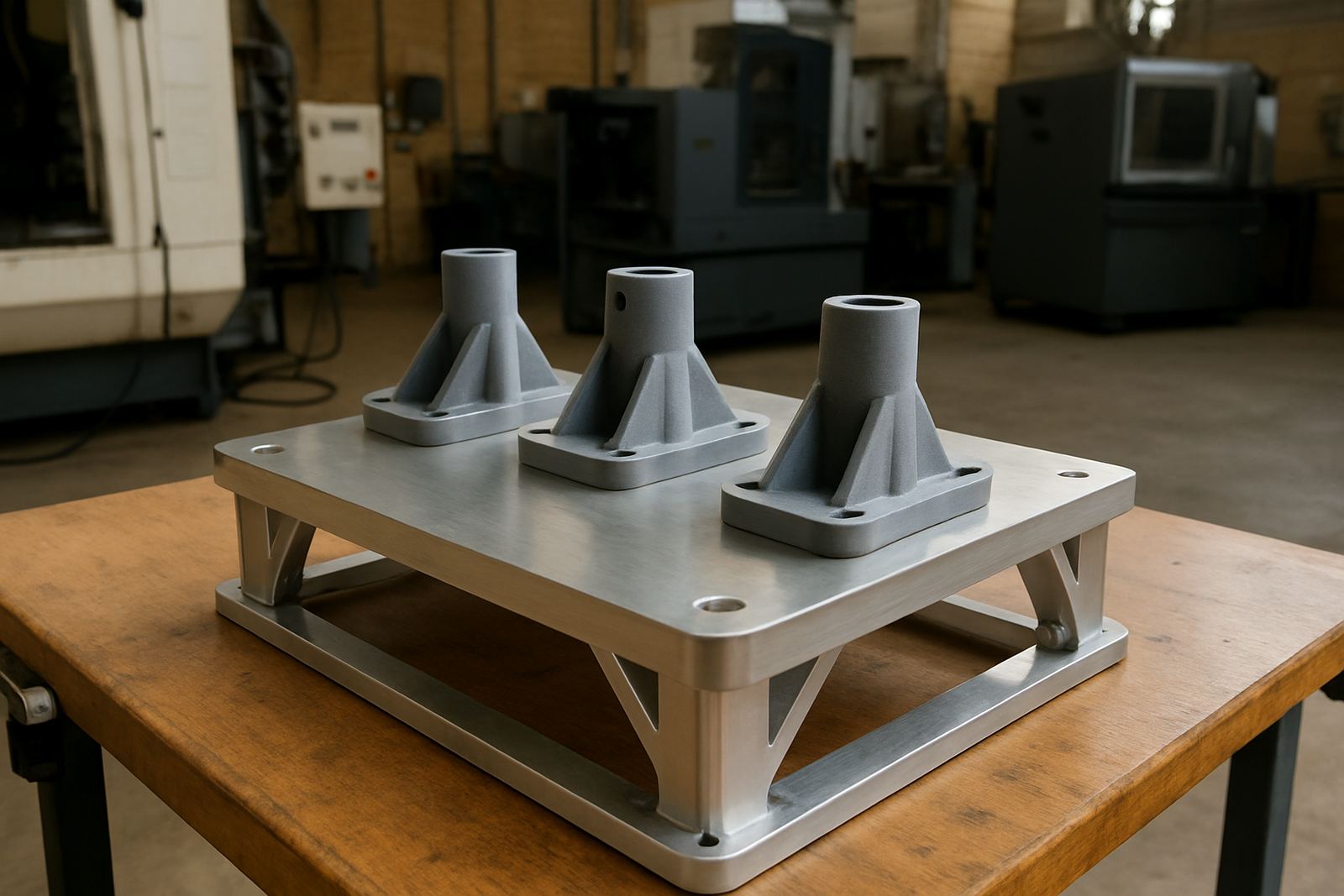
Why hybrid fixtures suit real shop-floor work
In a South African machine shop, fixture work has to answer to more than one pressure at a time. You need accuracy, but you also need speed, because a customer in Coega or Kariega does not want a two week wait while a one-off setup gets over-engineered.
That is where a hybrid approach makes sense. A machined base gives you the flatness, stiffness and datum control you need. Printed locators can then carry the custom shape, protective contact points or awkward part profile that would otherwise take too long to machine from solid. It is a sensible way to get moving on prototype work, short runs, and first-off approvals.
For workshops handling CNC milling, turning, inspection and light assembly, this method helps reduce the gap between drawing and production. It is especially useful when the part changes often or when the same family of components needs small adjustments from one customer to the next.
What to machine and what to print
The best hybrid fixture starts with a clear split between the permanent and the disposable. The base should be the rigid, repeatable part. That usually means a steel or aluminium plate with proper datum faces, clamping points and maybe threaded holes for future variants.
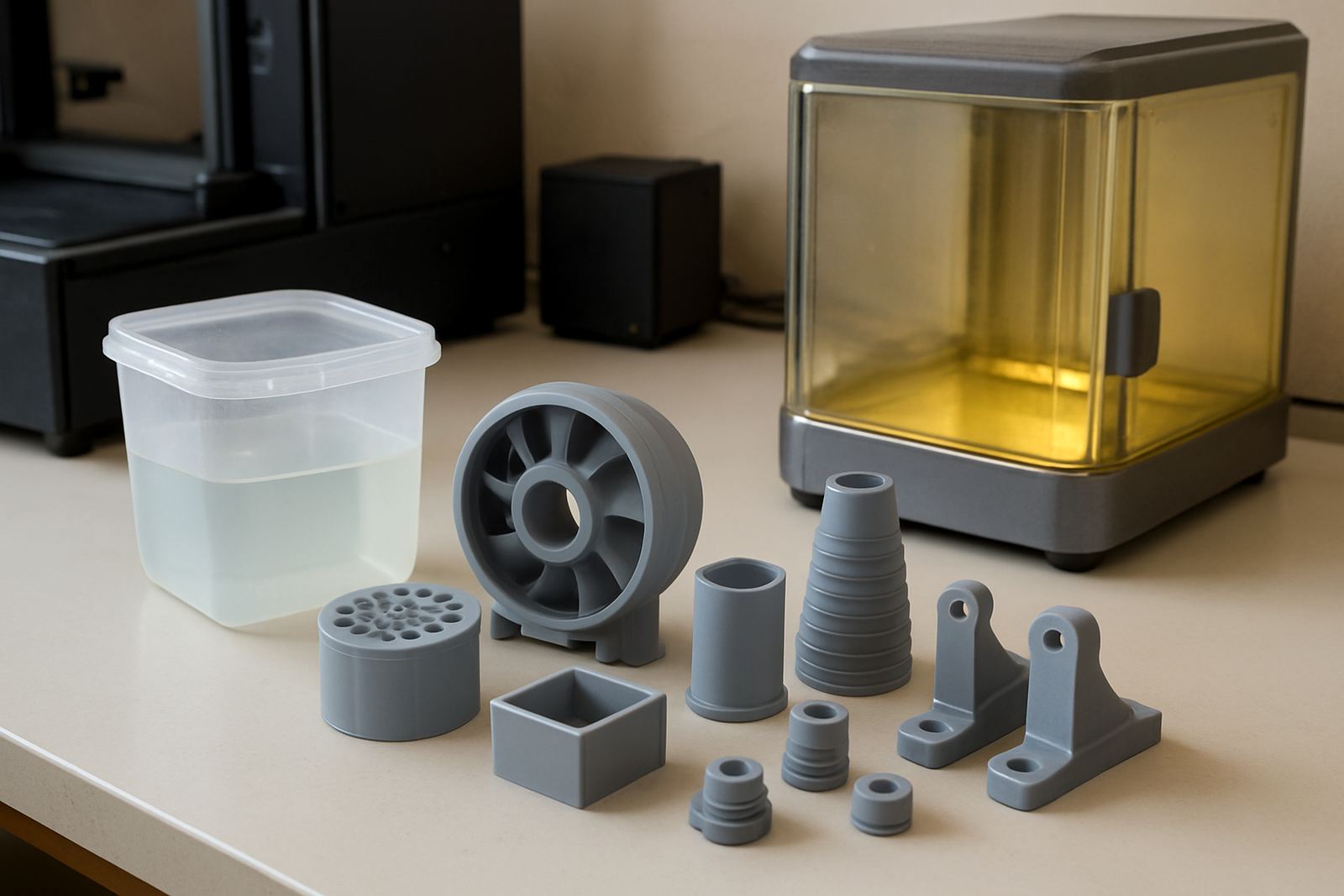
The printed section is best used where the geometry is specific to the component and likely to change. That could include soft locators, nest pockets, cable guides, sensor brackets or part-specific support blocks. If the printed piece wears out or the part design changes, you replace that insert instead of remaking the whole fixture.
- Machined base for flatness, repeatability and secure mounting
- Printed locator for custom profile support and faster revisions
- Replaceable wear pad for contact areas that get marked or abraded
- Modular stop block for setting different part lengths on the same fixture
That split keeps the expensive work where it belongs. You spend the machining time on the surfaces that matter most, and use printed parts where speed and flexibility have more value than full metal strength.
Accuracy starts with the base, not the plastic
A hybrid fixture only works if the base is properly made and checked. If the mounting face is out, the printed part will only repeat the error more quickly. Before any locator is fitted, the base should be inspected for flatness, parallelism and hole position. Runout checks and presetting are worth doing early, not after the job has already moved into production.
This is where careful shop practice counts. A clean holder, aligned vice and properly machined chuck jaws all feed into the same result, better consistency at the spindle. If the first setup is poor, the fixture will carry that error into every part that follows.
For shops in Markman, Despatch and the Port Elizabeth CBD, the biggest win is often not exotic tooling. It is getting the base right, making the locator fit properly and then verifying the whole arrangement before chips start flying.
Printed locators that survive the shop floor
Printed locators need to be chosen and used with care. They are not there to replace every machined surface. They are there to speed up part development, improve handling and keep the job moving while the design settles. For light contact points and shape location, they work well if they are supported properly and kept away from excessive heat, swarf build-up and hard impact.
South African shops also have to think about the practical side. Dust from grinding, coolant mist and coastal humidity can all affect how well a part lasts. If a printed component is used close to a wet process, it should be easy to remove and clean. If it sits near a spindle or on a transfer station, the contact surfaces should be checked often.
In some cases, a printed piece is best treated as a trial locator. Once the setup is proven, the shop can decide whether to keep it as a service part or replace it with a more permanent machined component. That step saves money because you only machine the final version once the job has settled.
A practical example from Struandale to Coega
Consider a small batch job in Struandale supplying parts into Coega. The component has a machined face, a stepped outer profile and a hole pattern that is likely to change after the customer checks the first article. If the shop builds the fixture entirely from metal, every small revision means more machine time and more delays.
With a hybrid fixture, the base plate can be machined once and kept in stock for future orders. The locators for the stepped profile can be printed, then adjusted after the first inspection. If the customer moves one hole by a few millimetres, only the locator insert needs to change. That cuts development time and keeps the machine available for revenue work.
For a local shop serving Gqeberha, Kariega and Despatch, this approach is practical because collection and delivery can be used for quick turnaround on the small parts and inserts. It suits the kind of work where you need a fast correction, not a whole new fixture every time.
Planning a hybrid fixture so it stays useful
Good hybrid fixtures are planned around reuse. If the base can carry more than one part family, and the printed elements are easy to swap, the workshop gets more value from the original build. That means thinking about hole spacing, clamp access, tool approach and whether the operator can load the part safely without forcing it into position.
It also helps to name the fixture parts clearly and keep a simple record of which insert suits which job. That is basic shop discipline, but it saves time when the same component comes back after three months. A clean holder, checked jaws and a known preset make the next setup quicker. No one wants to spend an hour figuring out which locator was used last time.
- Keep one stable base for several related parts
- Make printed locators easy to replace and label them properly
- Inspect wear points during routine tool inspection
- Use maintenance checks on printers and scanners so the next insert matches the drawing
When the fixture is planned this way, the shop can move faster without losing control. That is the point of a hybrid approach, less waiting, less rework and a more practical path from first sample to production.