Start With the Parts You Actually Run
A fixture plate should be planned around the jobs that fill the machine, not a wish list of every possible job. In many South African shops, that means a mix of small batch parts, repeat orders, repair work and urgent one offs. If your shop handles aluminium brackets on Monday, mild steel plates on Wednesday and a short run of stainless components on Friday, the plate needs enough pattern flexibility to support all three without constant rework.
The first step is to look at the largest component envelope, the usual clamp positions, and the tool access needed for each side of the part. Leave enough room for cutter overhang, probe access and chip clearance. On a plate that is too tightly packed, the operator ends up fighting the setup instead of machining the job. That costs time and can lead to poor clamping pressure or awkward offsets.
In Struandale and Markman, where shops often work under tight delivery schedules, a good plate layout can save hours over a week. It also makes sense for coastal conditions. Extra exposed fasteners and unplanned pockets trap moisture, so a tidy grid with sensible spacing is easier to clean and keep in service.
Choose a Hole Grid That Matches Your Clamping Style
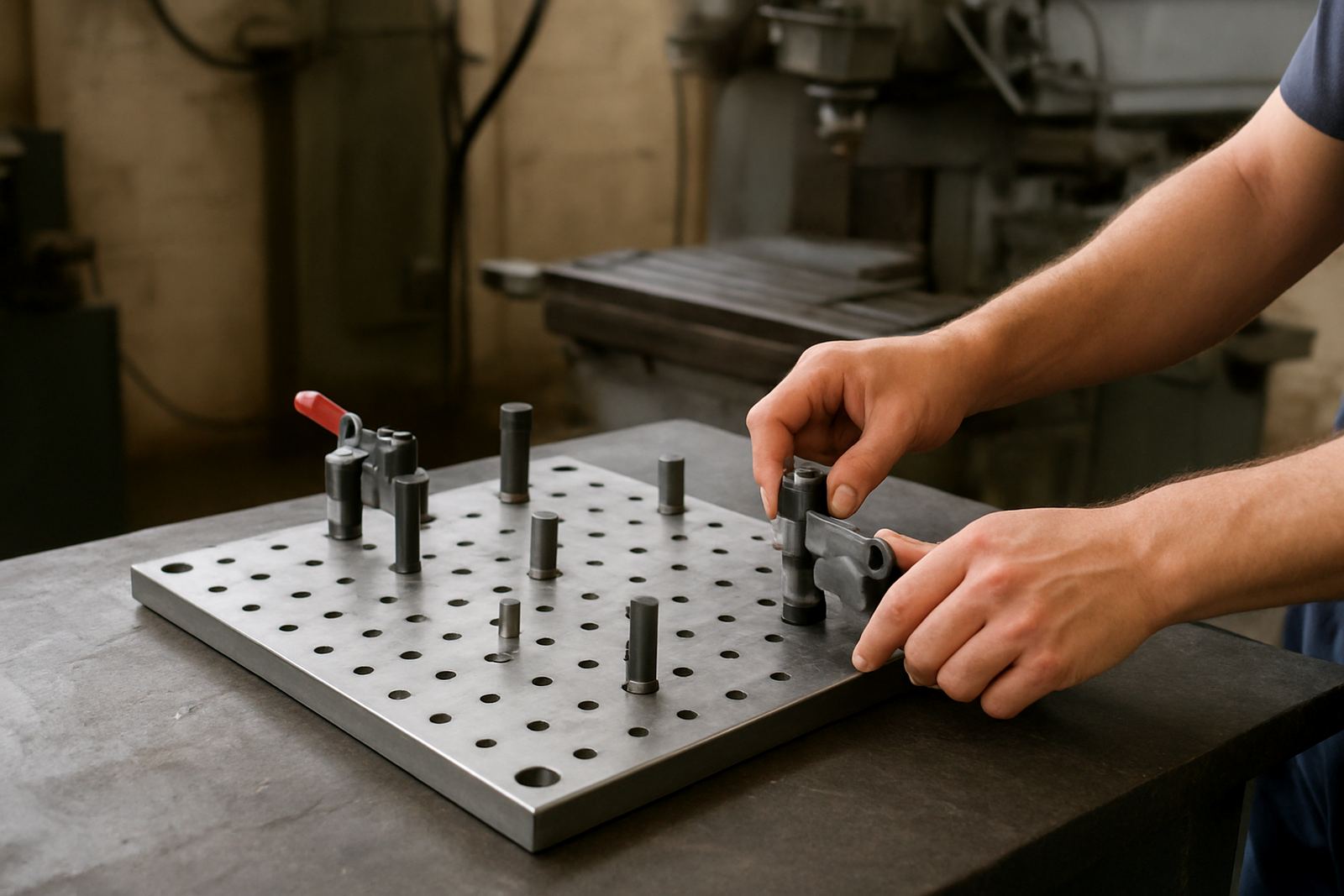
Most fixture plate plans come down to a pattern choice. There is no single correct grid, but there are practical rules. A regular square grid is easy to read, easy to document and simple for teams to follow. A rectangular grid may suit long parts better if your work is often narrow and extended. A mixed pattern can work, but only when the team understands the rules and the plate is marked clearly.
For small machine shops, a common mistake is choosing a hole pitch that is too fine. It looks versatile on paper, yet the plate becomes crowded and clamp hardware cannot fit where it should. A coarser pattern gives cleaner access and fewer collision risks. On the other hand, if the pitch is too wide, you lose precision when placing repeat jobs and spend more time using packing blocks and odd workarounds.
- Use a square grid when the shop handles mixed part shapes and frequent changeovers.
- Use a rectangular grid when most jobs are long, narrow or rail type components.
- Keep the spacing large enough for clamp bodies, washer access and chip washout.
- Mark the plate clearly so operators can repeat setups without guessing.
At Tooling, many customers in Gqeberha, Kariega and Despatch ask for advice on layouts that suit both production and repair work. The best answer is usually a pattern that fits the actual clamp set on the floor, not just the catalogue dimensions. That keeps the plate practical from day one.
Build in Access for Tooling, Probing and Cleanup
A fixture plate is not only about holding the part. It must also leave room for the machine to do its work properly. Cutting tools need clearance at entry and exit points, especially when you are working around deep pockets or irregular faces. Probes need a clean path too, otherwise measurement points become unreliable and the operator has to improvise.
Chip management matters more than many teams expect. A dense pattern can catch swarf around the base of clamps and under the part, which makes cleaning slower and can affect seating on the next job. This is a bigger issue in shops running long shifts or dealing with interrupted power, because restart time is already under pressure. If the fixture can be cleaned quickly, the operator can get back to cutting sooner.
For coastal users in Gqeberha, exposed steel surfaces should be planned with maintenance in mind. A plate with sensible access points is easier to wipe down, inspect and store. If your work is often outdoors between jobs or moved between areas, a pattern that avoids hidden pockets and trapped coolant will save trouble later.
Use Datum Strategy to Protect Repeatability
Hole patterns work best when they are tied to a clear datum system. Operators need a consistent way to locate the plate, load the work and return to the same position after cleaning or tool changes. Without that, even a well machined plate can behave differently from one setup to the next.
A practical approach is to dedicate reference positions on the plate for primary location, then use the remaining points for flexible clamping. This avoids the common problem of using every hole for general purpose holding and then having no stable reference left for future jobs. If you are running repeat batches, the reference points should be protected from damage and kept free of burrs.
- Reserve a small number of fixed location points for primary alignment.
- Keep the remaining holes available for clamps, stops and support posts.
- Record the preferred setup in a simple sheet or job card.
- Inspect the reference holes regularly for wear, burrs and coolant build up.
In a busy Port Elizabeth CBD repair shop, for example, the same part may come back months later for another run. A clear datum plan means the operator can pick up the job again without starting from scratch. That saves time and reduces the risk of setting errors.
Match the Pattern to the Machine and Workholding Hardware
Fixture plates are only useful if the machine table, fixture hardware and clamp set all work together. Before locking in a hole pattern, check what type of screws, studs, step clamps, locating pins and support components are already used in the shop. It is pointless planning a plate around hardware that nobody has in stock or cannot replace quickly in South Africa.
On smaller vertical machining centres, a lighter plate with a straightforward pattern may be the better choice because it keeps setup weight manageable and reduces handling strain. On larger machines, a heavier plate can support more positions and more complex workholding. The plate should still be easy to lift, align and remove during maintenance. If it needs three people every time, it will get used less often.
Shops in Coega and Struandale often work to production targets where quick changeovers matter. In that setting, a pattern that suits the actual machine envelope and standard clamp stock makes a real difference. The operator can move from one job to the next with fewer adjustments, which helps keep the machine busy through the day.
Plan for Maintenance, Inspection and Future Expansion
Good fixture plate planning does not stop at the first job. Holes wear, edges pick up marks and setup habits change as the shop grows. That is why the pattern should allow for inspection, rework and occasional cleaning without taking the plate out of service for too long. A plate that can be checked quickly between shifts will last longer and keep tolerances tighter.
For many machine shops, the future is not one big investment but a series of smaller upgrades. A plate that works today should also leave room for tomorrow’s jobs, whether that is a new part family, extra axis work or a different clamping method. Keep a little spare capacity in the layout. It is better to have two unused rows than to run out of usable positions after six months.
Tooling supports customers nationwide from Gqeberha with practical services such as tool inspection, holder cleaning, runout checks, vise alignment and presetting. That sort of routine care is what keeps fixture systems accurate. If the plate is part of a larger process, the whole process becomes steadier, even when the week is busy and the load shedding schedule is not kind.