
Why clean collets lose grip so quickly
A collet is a small part with a big job. It must close evenly around the cutting tool, and any dirt, coolant residue or tiny chips in the slots can stop it from seating properly. When that happens the tool can pull off centre, chatter more easily, or mark the holder faces. In a workshop that runs long shifts or handles mixed jobs, those small problems add up fast.
Grease and fine swarf are the usual culprits. Dust from grinding can also work its way into the taper and the nut threads. If the collet is used in a wet area or left near an open machine over a weekend, corrosion can start before Monday morning. On the KwaZulu-Natal coast it can happen even faster, and in Gqeberha the salt air has its own way of finding every exposed surface.
A simple cleaning routine after every shift
The best time to clean collets is before the chips harden. A short routine at the end of a shift takes less time than recovering from poor grip on the next job. Do not leave cleaning until the collet looks dirty, because the fine contamination is often the part you cannot see.
- Wipe the outside with a lint-free cloth to remove coolant and loose dust.
- Brush the slots gently so chips do not pack into the spring cuts.
- Check the bore and taper for scoring or stuck debris.
- Clean the nut threads and seating faces before reassembly.
- Dry all parts fully before storage, especially after water-based coolant use.
Compressed air can help, but use it carefully. A strong blast can drive grit deeper into the slots or into your eyes, so wear proper eye protection and keep the nozzle controlled. If the collet has stubborn residue, use a suitable cleaner and a soft brush rather than scraping it with a hard tool. That kind of damage often starts with a quick fix and turns into a repeat problem.
Storage habits that prevent hidden damage
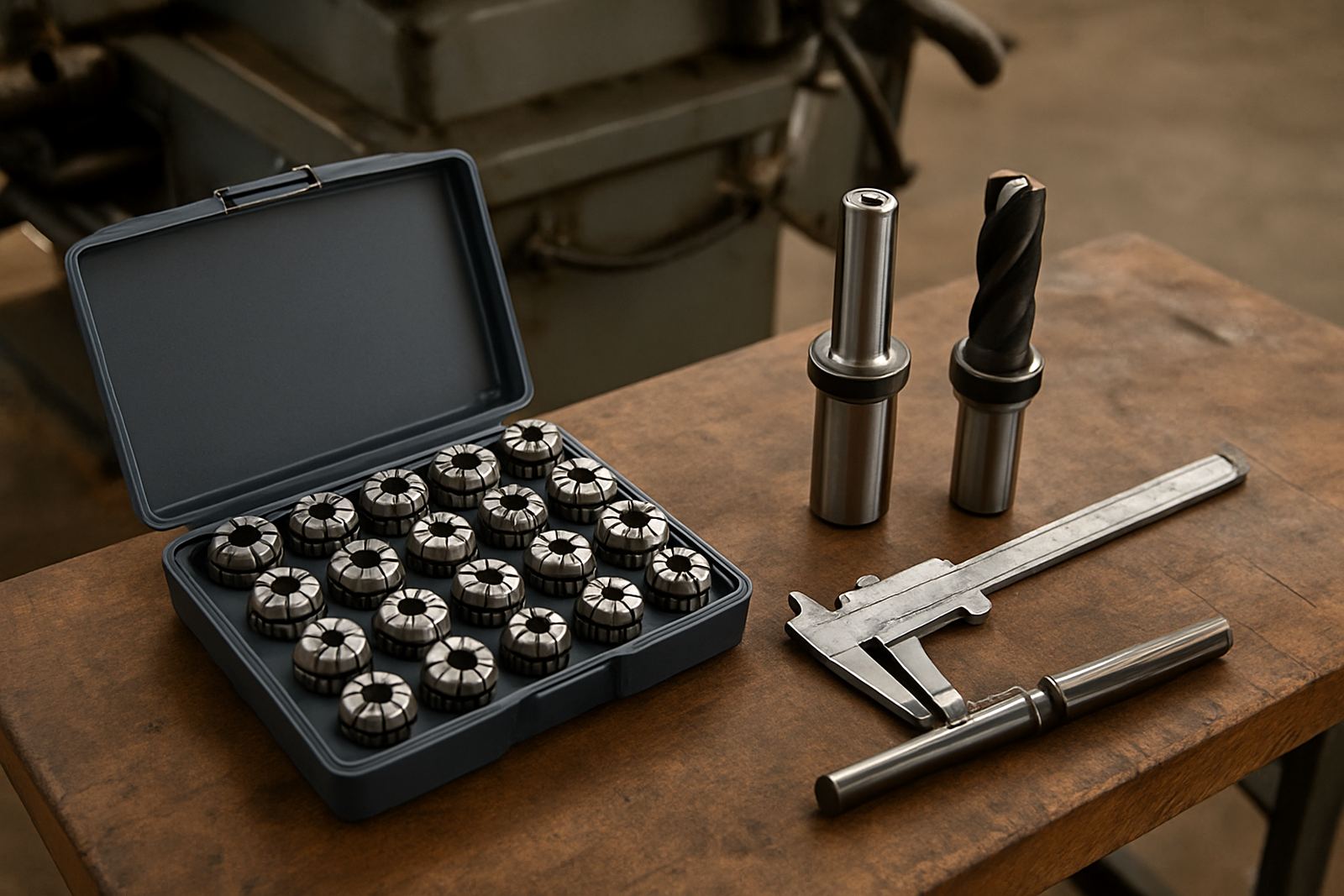
Clean collets can still lose accuracy if they are tossed into a mixed tray with cutters, spanners and loose bolts. The spring cuts can nick against harder parts and a tiny mark is enough to affect how the collet closes. Storage should keep each size separate, dry and easy to identify.
In Struandale and Markman workshops where changeovers happen all day, it helps to label storage by size and type. That keeps operators from forcing the wrong collet into a nut or leaving it half seated. A simple drawer insert, rack or sealed container can do more for accuracy than most people expect. Keep the area away from grinding dust, solvent spills and floor moisture. If the workshop shuts down over a public holiday, make sure collets are not left in the machine overnight when the coolant tank is still open.
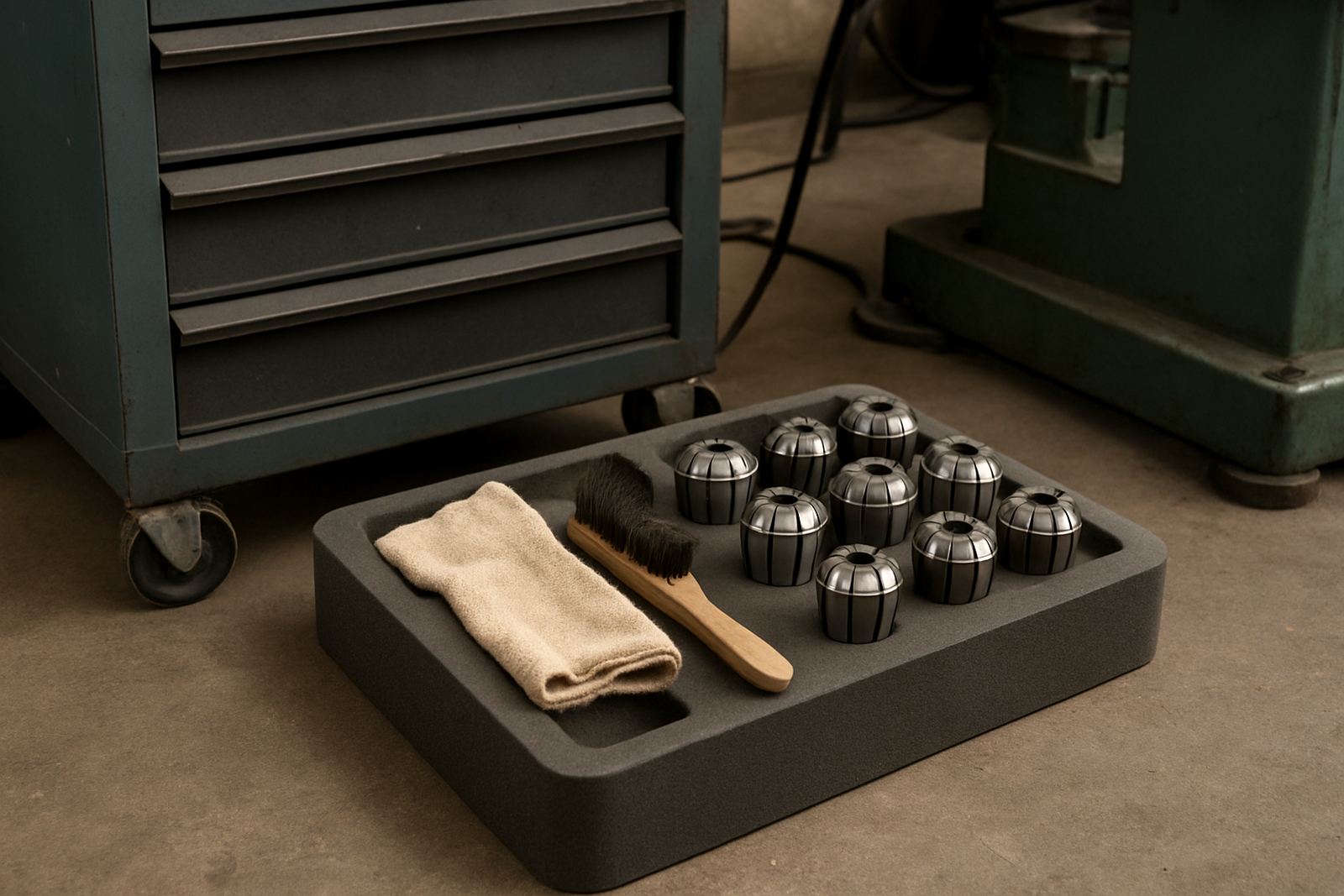
- Store collets upright or in dedicated slots so the spring cuts are not compressed.
- Keep matched sets together for the tools they commonly hold.
- Avoid loose bins where parts can rub against each other.
- Seal storage in coastal areas if humidity is high.
- Mark damaged or suspect collets clearly so they are not put back into service.
Know when wear is the real problem
Cleaning helps, but it cannot fix worn collets. After repeated clamping cycles the gripping surface can lose its shape, and the slots can fatigue. A collet that has been dropped, heated too much or overtightened several times may still look serviceable yet grip poorly under load. That is where many shops lose accuracy without realising it.
Watch for marks around the outside, uneven closing, visible cracks, or tools that need extra force to seat correctly. If the finished size starts drifting or the same cutter shows different runout from one setup to the next, inspect the collet before blaming the machine. A quick runout check can save a lot of trial and error. In heavier production, it is worth treating collets as measured tooling rather than general consumables, because the small cost of replacement is usually less than the cost of scrap or rework.
One common mistake is mixing old and new parts in the same holder set. The nut may feel fine and the taper may look clean but the collet itself could already be tired. If your work includes tight tolerances, stainless steels or long unattended runs, worn collets become a bigger risk than most operators expect.
How to protect grip during changeovers and storage
Good habits during changeovers matter just as much as cleaning. When a tool is removed, do not leave the collet sitting in the machine while the next operation is being prepared. It can pick up chips, coolant mist and dirt from the surrounding area. If there is a delay, cover the machine area or remove the assembly completely and place it in a clean tray.
For jobbing shops in Port Elizabeth CBD, Despatch or Coega where jobs can move quickly from one machine to another, the risk is usually mix-ups rather than contamination alone. A collet used for a 6 mm cutter should not be forced onto an 8 mm tool and then kept in service because it still seems to hold. That extra strain can open the spring cuts or leave polished marks that reduce clamping consistency. If you are running through load-shedding changes or restarting after a shutdown, inspect the set before production resumes and not after the first failed part.
- Use the right size every time, never force a tool into a near-match collet.
- Check the seating surfaces after any interruption to the job.
- Keep a clean cloth and small brush at the setup station.
- Replace damaged storage lids or trays that allow dust to enter.
A Gqeberha example from a busy production floor
Consider a machine shop in Struandale running short batches for agricultural and automotive parts. The team changes tools frequently, with coolant mist in the air and fine chips building up around the machine over a full day. If the collets are wiped down only once a week, the outside may still look acceptable while the slot contamination slowly affects clamping force. The result can be slight variation in hole size or rougher finishes that send operators back to the machine for corrections.
After introducing a simple end-of-shift routine, separate storage and weekly inspection, the shop can usually spot bad parts earlier and keep better repeatability. That matters in any busy yard, but especially where a single delay can hold up delivery to Kariega, Coega or further afield. Small, disciplined care is often what keeps the process steady. It is not complicated, just consistent.
Build a collet care routine that fits the workshop
Collet care does not need a long checklist or a large budget. It needs consistency, clean handling and a habit of checking the parts before they go back into service. If a shop already maintains holders, checks runout and keeps workholding aligned, collets should be part of that same routine.
For teams with mixed CNC and manual work, the simplest system is usually best. Clean after use, dry fully, store separately and inspect regularly. If a part is questionable, take it out of circulation rather than hoping it will last one more week. In machining, that one week often turns into wasted material, more setup time and unnecessary stress for the operator.
Good collet care supports accurate gripping, longer tool life and less variation from shift to shift. That is useful in any South African workshop, whether the job is a one-off bracket or a full production run.