Start with the part, not the chuck
Before you compare sizes or jaw styles, look at the workpiece. A short steel blank for a production run in Struandale needs a different grip to a thin walled aluminium tube for a repair job in Kariega. Measure the part diameter, length, weight and where the cutting forces will act. If the component is long and slender, a standard 3-jaw scroll chuck may hold it quickly but not always accurately enough for tight tolerance work.
Think about the machine too. Spindle nose type, bore size and maximum chuck weight all matter. On older lathes, a heavy chuck can affect balance and put extra strain on bearings, so matching the chuck to the machine is just as important as matching it to the part. If load shedding is part of your daily routine, choose equipment that can be set up and checked quickly so you lose less time when power comes back on.
Understand jaw count and what it changes
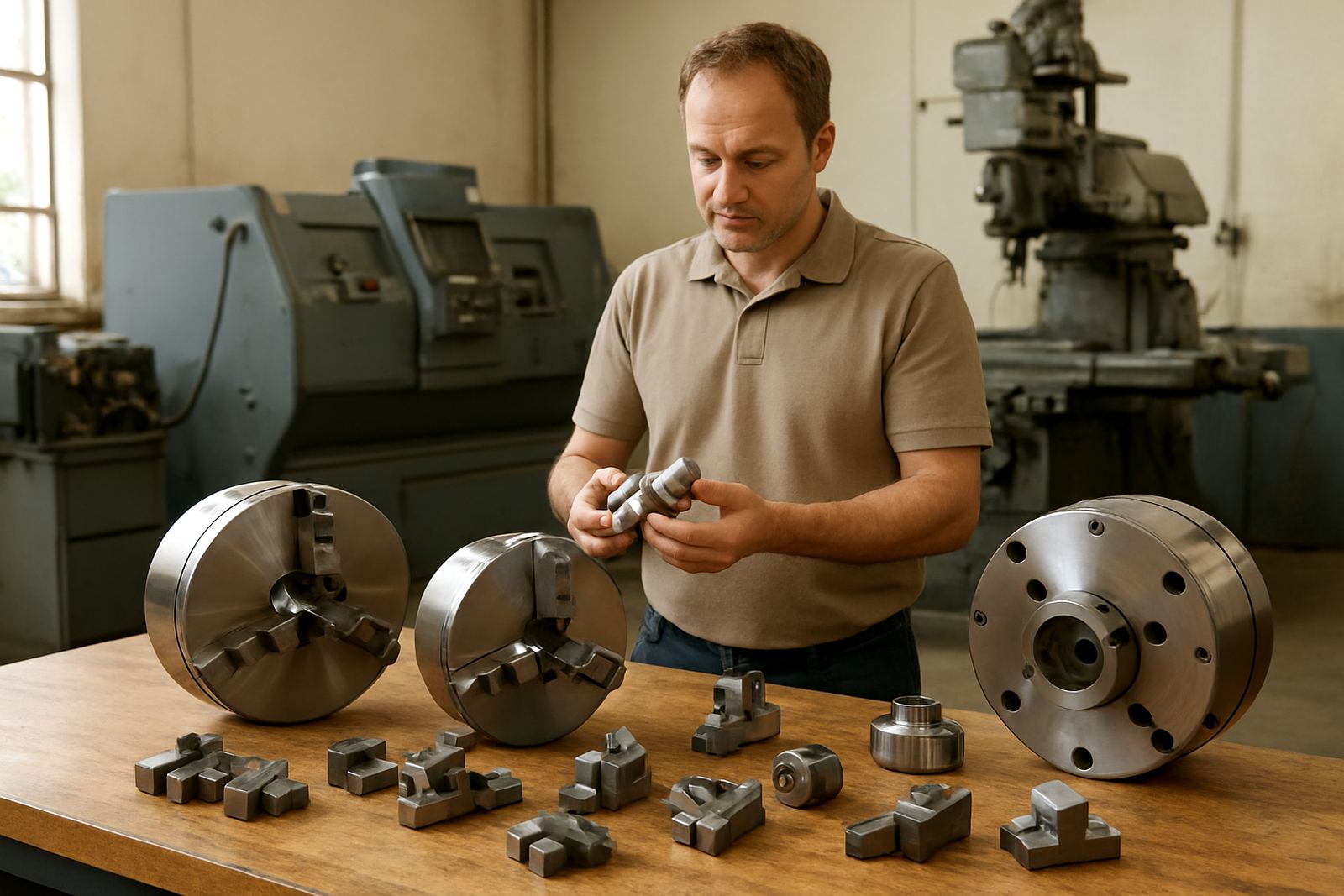
Jaw count affects how the chuck grips the job and how quickly you can set it up. A 3-jaw chuck is common for round or hexagonal material and is fast for repeat work. It self centres, which helps when you need speed on general turning. A 4-jaw independent chuck gives more control and is often better for irregular parts, off-centre jobs and accurate setup where concentricity must be checked carefully.
In practice, the choice often comes down to speed versus control. A job shop in Markman doing mixed work may keep both types on the floor because each one solves a different problem. For delicate or finished surfaces, soft jaws can be machined to suit the part and reduce marking. Hard jaws last longer on rougher production work, but they can leave witness marks if the clamping setup is not correct.
- 3-jaw: fast loading, good for repeat round work
- 4-jaw: better control for odd shapes and accurate centring
- Soft jaws: ideal for finished parts and custom gripping
- Hard jaws: better for wear resistance and heavy duty cycles
Match clamping force to the material and cut
Clamping force is where many workshop problems start. Too little grip and the part can creep under load, especially on heavier cuts or on jobs with interrupted machining. Too much force and you risk distortion, jaw marking or even cracking thin sections. The right setting depends on the material, the chuck design and the type of tooling used.
For soft aluminium and thin wall stainless, keep the grip firm but controlled. For solid steel bars or forgings, you can usually use more force, but always check for jaw bite and part movement after the first cut. In humid coastal conditions around Gqeberha, chuck components can corrode faster if they are not cleaned and lightly protected. A clean chuck body, free jaws and correct lubrication make a noticeable difference in repeatability.
- Check if the part can deform under clamp pressure
- Look at cutting depth and feed rate before setting force
- Inspect for jaw marks after the first machining pass
- Use the lightest grip that still prevents slip
Choose the right chuck for the application
Application fit is often more important than brand or size. A general machine shop may need one chuck for production bars, another for repair work and a third for awkward castings. If you are working with long shafts, use support methods that reduce deflection. If you are machining face features on short components, a precision chuck with good runout control may be the better choice.
Also consider the way the part enters and leaves the machine. If operators are changing jobs all day in Despatch or Coega, quick change tooling and repeatable setups can save a lot of time. For higher volume work, ask whether the chuck can be adapted with soft jaws, step jaws or special inserts. That flexibility helps when customer specs change and there is no time to rework the whole setup.
- Production turning: fast grip and repeatability
- Repair work: flexibility for mixed sizes and worn parts
- Precision finishing: low runout and stable clamping
- Heavy roughing: stronger grip and durable jaw faces
Check runout, alignment and jaw condition before buying
Runout is one of the clearest signs that a chuck or setup is not right. If the jaws are worn unevenly or the body has seen hard use, the job will show it. Before choosing a chuck, check the expected tolerance on the parts you machine. A light engineering workshop can tolerate more variation than a shop making close fit components for assembly, so know your own standards first.
Jaw condition matters too. Inspect for scoring, chips and poor contact faces. If you already use runout checks, chuck jaw machining and vise alignment in your workshop routine, you will know that small errors add up quickly. A chuck that looks fine on the outside can still give poor results if it has internal wear or damaged grip surfaces.
- Measure runout on the machine, not only on the bench
- Check jaw wear across the full gripping range
- Confirm the chuck sits square on the spindle mount
- Test the setup with a sample part before production
Keep maintenance simple and consistent
A good chuck should be easy to maintain in a busy South African workshop. Regular cleaning, light lubrication and inspection keep performance steady and help parts last longer. If you work across Struandale, Markman and Port Elizabeth CBD, it is worth building maintenance into the weekly routine rather than waiting for a problem. A few minutes spent on holder cleaning and presetting can prevent a lost shift later.
Set a clear checklist for storage, cleaning and inspection after every job. This is especially useful where multiple operators use the same lathe. If a chuck starts sticking, losing grip or showing uneven jaw wear, stop and investigate before it causes scrap. Good upkeep also helps when collection and delivery is part of your support plan, because it lets you hand over equipment in ready condition, not a surprise one.
- Clean swarf from jaws and scrolls after use
- Check lubrication points on a set schedule
- Store soft jaws and accessories together
- Record any wear or slip noted during production
A practical buying checklist for South African shops
When you are ready to buy, keep the decision practical. The best chuck is the one that fits your machine, your parts and your production pace. If you are comparing options for a workshop in Gqeberha or a branch further inland, use a shortlist and tick off the basics before placing the order. That keeps the focus on performance instead of guesswork.
Ask yourself whether the chuck will handle your most common jobs, not only the hardest one. Make sure your team can clean it, set it and inspect it without slowing the whole line. If you need help with tool inspection, holder cleaning, scanner calibration or printer maintenance in the same visit, align the chuck choice with the rest of your shop support so everything works together. It is better to buy once and buy right than to keep replacing equipment that never matched the job in the first place.
- Does it suit your spindle and lathe size?
- Is the jaw count right for the parts you machine most?
- Can it grip without distorting the workpiece?
- Will your team maintain it properly each week?