What soft jaws do in everyday machining
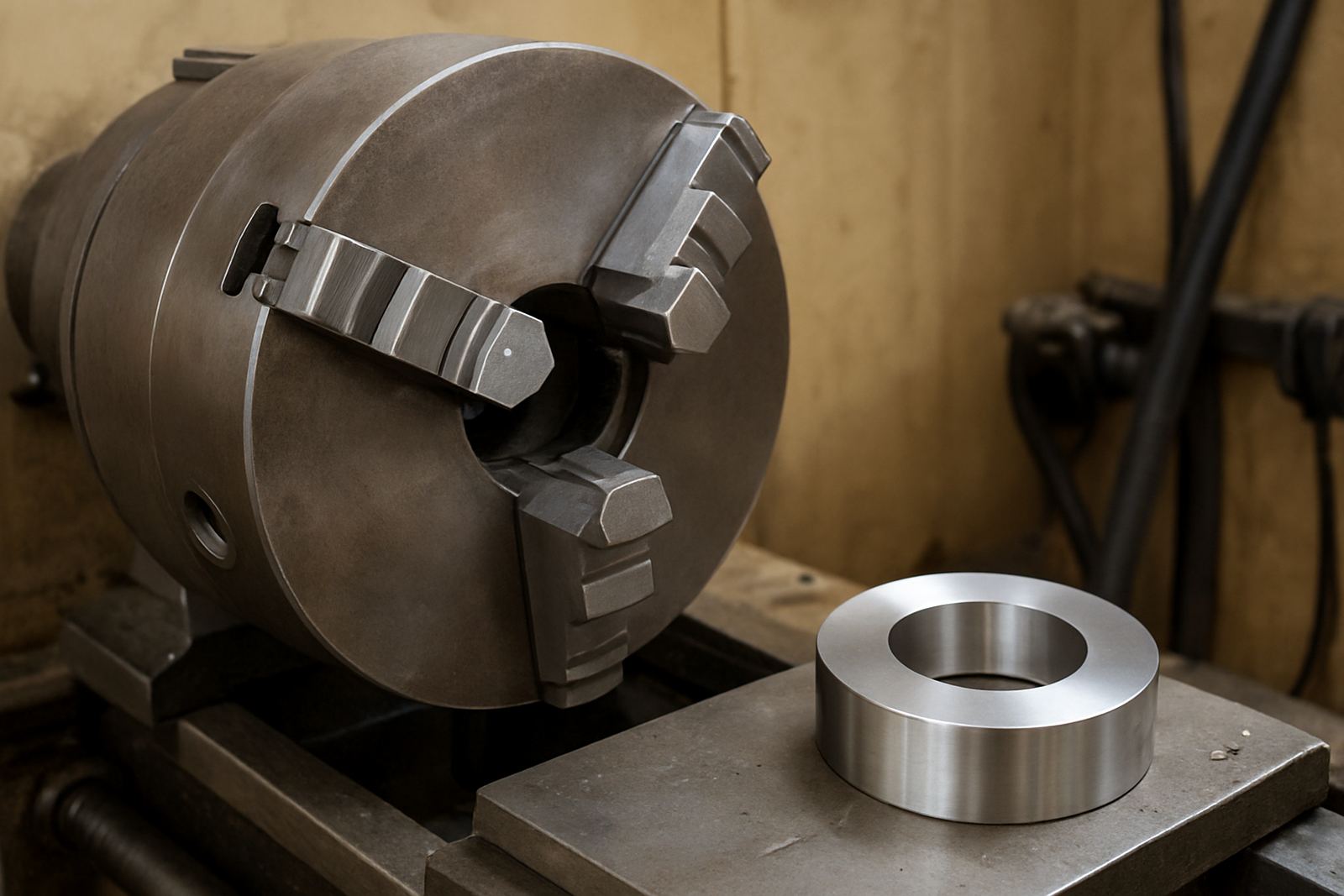
Soft jaws are machinable jaws fitted to a chuck or other holding system, then bored or profiled to suit one specific component. Instead of gripping on a generic step, the jaw is cut to the exact outside shape or diameter you need, which helps keep round parts true and supports thin walls without crushing them. That matters when you are running shafts, hubs, flanges, bushings, rings, and irregular parts that would otherwise slip or distort.
In a Gqeberha workshop or a plant in Coega, the value is simple: better repeatability, less rework, and less time spent packing up parts with shims. Soft jaws also help when you need to hold a component for a second op after turning, facing, or drilling. If your parts vary slightly from batch to batch, a fresh jaw cut can save a lot of faffing about.
They are commonly used in CNC turning work, but they also suit manual chucks where accurate gripping is needed. For shops handling mixed jobs, soft jaws are a practical option because one set can be re-machined many times before replacement is needed.
Sizes, styles and grip options
Soft jaws are selected to suit the chuck size, jaw style, and the gripping method required for the job. Common options include standard plain jaws for profiling, tall jaws for longer contact length, and stepped jaws for parts that need a shoulder stop. The right height and body length depends on how much jaw engagement you need, the part overhang, and the clamping force available.
Typical selection points include chuck diameter, jaw slot type, and whether you need internal or external grip. For most machine shops, the aim is to machine enough jaw material to create a full contact face while still leaving a safe amount of body behind the cut. If the jaws are too short, you lose grip. If they are too tall for the job, you can introduce chatter or flex.
- Chuck fitment matched to the existing jaw carrier or master jaw
- Plain, stepped, or profiled jaw faces depending on the component
- Extra gripping height for longer parts or deeper bore support
- Internal or external holding, depending on part geometry
- Machinable material chosen to give a clean cut and consistent clamping
Best fit for turned and irregular components
Soft jaws are best when the component has a finished diameter, a non standard outside shape, or a thin wall that needs gentle but accurate support. They are widely used for shaft ends, wheel centres, sleeves, pump parts, adaptor rings, and one-off pieces that need a custom grip. If the job has a machined land or datum face, the jaws can be cut so the part seats square and true on every cycle.
They also work well where surface marking must be kept to a minimum. A hard jaw can leave witness marks on aluminium, brass, mild steel, and other finished surfaces. Soft jaws reduce that risk, especially when the part needs to move to another operation after machining. In production work, that can mean fewer rejects and less time spent dressing components before assembly.
For repetitive batches, the same jaw set can often be re-cut for a new component size. That makes them useful for jobbing shops in Struandale, Markman, and Despatch where the work changes often and setup time matters. The jaws should be checked for enough material before each new profile is cut, because once the cutting height is gone, the set must be replaced.
Installation, setup and power requirements
Soft jaws themselves do not need electrical power or gas. They are a mechanical workholding item, fitted to the chuck and then machined in place or on the machine they will be used on. Installation should always follow the chuck maker's clamping sequence and torque guidance, with the master jaws cleaned first so swarf does not sit under the jaw and throw the setup out.
To machine the gripping profile, you will need the correct lathe or machining setup, cutting tools, and enough clearance for the cutter path. Most shops bore or mill the jaws while they are mounted and clamped exactly as they will be for production. That way the finished grip matches the true clamping position, not an approximate one.
- Fit to clean master jaws and tighten in the correct sequence
- Machine the profile in the same clamped position used for the part
- Check jaw projection before cutting to avoid tool interference
- Confirm spindle speed and feed for the jaw material and cutter type
- Do a trial grip and indicator check before loading full production
Where compressed air is used on the machine, keep the chuck area clear but avoid blowing chips deeper into the jaw slots. On coastal sites around Gqeberha, regular cleaning is especially important because moisture and fine swarf can accelerate rust if jaws are left dirty between runs.
Care, servicing and what keeps them accurate
Soft jaws need regular inspection because their accuracy depends on condition as much as on the original cut. If a jaw gets dinged, worn at the contact face, or packed with chips, the part will not sit the same way every time. That can affect concentricity, part finish, and tool life. After each job, remove chips, wipe the faces clean, and look for witness marks where the component was clamped.
At intervals, check jaw runout, gripping height, and the condition of the jaw mounting surfaces. If you see inconsistent grip or a part starts creeping under load, the jaws may need recutting or replacing. In workshops doing high volumes, it is worth putting soft jaws on the same inspection cycle as holder cleaning, runout checks, and chuck jaw machining. Small issues are cheaper to correct early than after a batch is already cut.
Storage matters too. Keep unused jaws dry, labelled by chuck size or job number, and separated from oily rags and grinding dust. In humid areas or sites near the harbour, a light protective oil helps. If jaws are stored incorrectly, surface corrosion can affect the first setup and the jaws may not seat properly when you need them.
What to check before you order
Before ordering soft jaws, confirm the chuck size, jaw style, and the exact machine they will fit. If you are replacing an existing set, measure the overall length, height, thickness, and slot profile. For a new job, send the part drawing or at least the key outside diameter, gripping area, material type, and any critical face that must stay clear of the clamp.
You should also decide whether the grip will be internal or external, how much contact length you need, and whether the part must be supported on a shoulder. If the component is thin walled or prone to distortion, tell us the load direction and the clamping pressure you plan to use. That helps avoid over-clamping, which can mark the job or pull it out of round.
- Chuck size and jaw fitment type
- Internal or external gripping requirement
- Part diameter, length, and wall thickness
- Required contact area and any clearance needs
- Material being machined and expected batch size
- Any critical faces, grooves, or steps that must stay free
If you are unsure, send the sample part or the drawing and the setup can be matched more accurately. For machine shops across Gqeberha, Kariega, and nationwide, that usually saves time on the first run and reduces back and forth during setup.
Key facts
| Product type | Machinable soft jaws for custom workholding |
|---|---|
| Fitment | Selected to suit the existing chuck and jaw carrier |
| Common use | Turned parts, irregular components, second operations |
| Grip style | Internal or external, plain or profiled faces |
| Material | Machinable jaw stock for repeat profiling |
| Service life | Re-cuttable until the usable gripping height is reached |