What a resin 3D printer does in a workshop
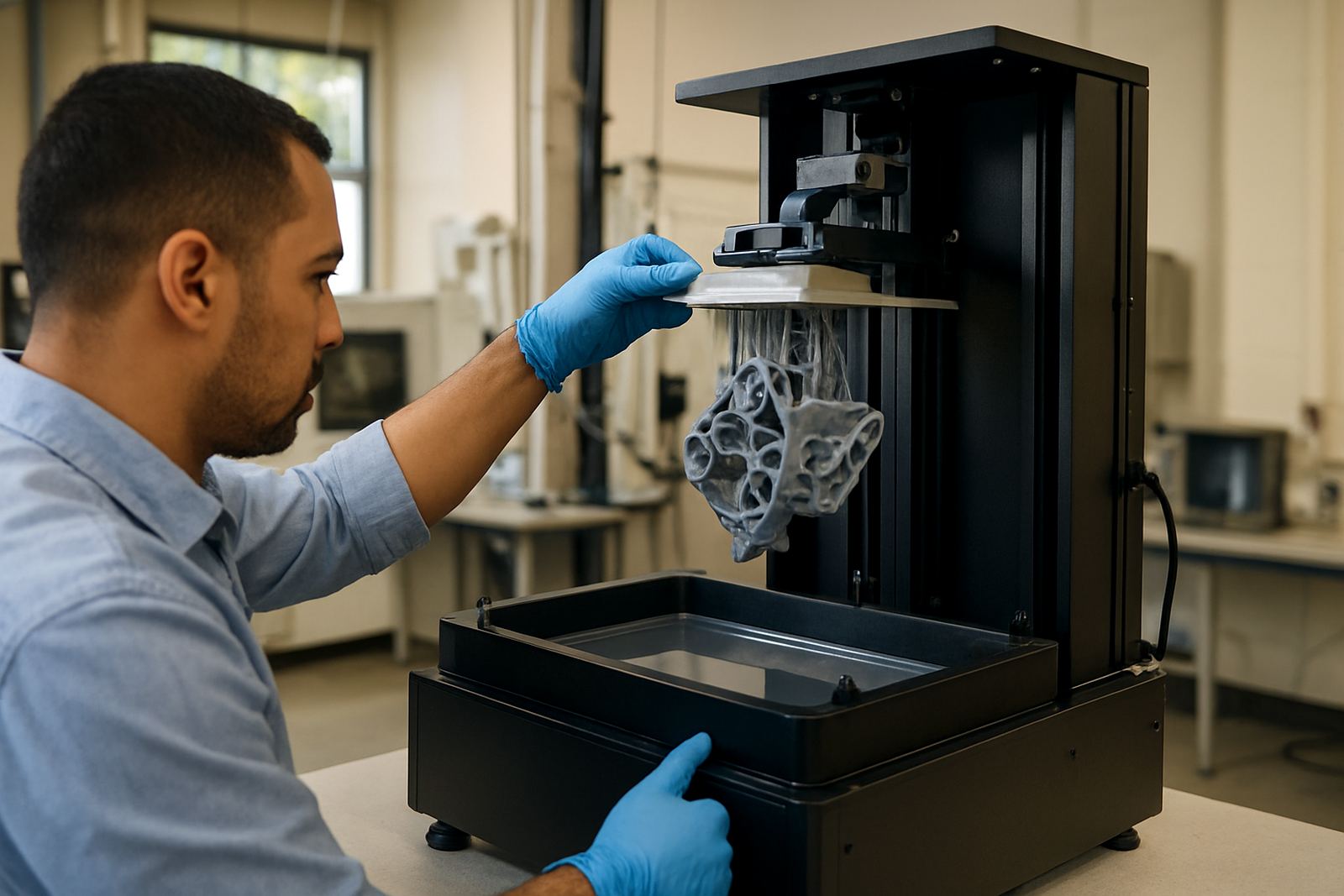
A resin 3D printer builds parts layer by layer from liquid photopolymer resin that is cured by a light source, usually UV. It is used when you need crisp edges, smooth surfaces and small features that would be difficult to machine cleanly or produce quickly in a mould. In South African workshops it is often chosen for pattern work, fit checks, gauge models, dental and lab style parts, and inspection aids for engineering teams.
Compared with filament printers, resin systems are generally better for fine lettering, thin walls, miniature holes and complex shapes. They are not the first choice for high impact production parts that must live near heat, oils or rough handling, but they are very good for detailed prototypes and low volume specialist components. For shops in Gqeberha, Kariega, Despatch and the wider Eastern Cape, that means faster turnarounds when a customer needs a part to test before metal or plastic production.
Because these machines work with liquid resin, they need a tidy work area, a stable bench and some basic cleaning discipline. You also need to plan for post processing, including washing and UV curing, so the full workflow is just as important as the printer itself.
Typical sizes, build volumes and system options
Resin printers are usually selected by build size and the level of detail required. Smaller machines suit jewellery style parts, electronics enclosures, dental models and small inspection aids. Larger build plates are better for batching many parts in one run or printing larger master patterns. The right choice depends on part size, target finish and daily volume, not only on the machine price.
Common options include open resin systems for general workshop use, enclosed units for cleaner handling, and printers with heated or temperature controlled chambers for more consistent results in cooler months. In coastal areas like Gqeberha and Port Elizabeth CBD, a closed cabinet helps keep dust and humidity under better control. Some systems support a range of layer thickness settings, so you can choose quicker output for prototypes or finer layers for presentation parts.
- Small format machines for fine parts and short runs
- Mid size systems for mixed jobs and batch production
- Large format units for bigger models or multiple parts per build
- Wash and cure stations for cleaner post processing
- Optional resin tanks and build plates for faster changeovers
If you are comparing units, check the actual usable build area rather than the headline footprint. Also confirm access for removing parts, cleaning the vat and replacing wear items. A machine may fit on the floor, but if it is hard to service then daily use becomes frustrating pretty quickly.
Where resin printing makes the most sense
This type of printer suits machine shops, design studios, R and D teams, dental and lab environments, pattern makers and maintenance departments. It is especially useful when a part must be checked for form, assembly fit or surface quality before committing to a more expensive process. For example, a shop in Markman may print a jig body, while a Coega team may use the printer for a visual sample or a low volume fixture.
It also works well for inspection aids, since resin parts can capture small bosses, slots and profiles accurately. That makes it easier to confirm clearances, clamp positions and component orientation before machining the final item. When time is tight and load-shedding interrupts production, a resin printer can still recover work quickly if you have power backup and a stable workstation.
For coastal conditions, the main things to manage are dust, warmth and moisture. Resin should be stored correctly, lids should stay closed when not in use and waste must be handled properly. A good setup keeps prints consistent and reduces failed jobs, which matters when you are printing for customers on deadline.
Installation, power and room requirements
Most resin printers run from standard single phase supply, usually 220V to 240V, with modest power draw compared with larger workshop machines. Exact consumption depends on the model, but the printer itself is normally light on electricity. The bigger consideration is a steady power source for the printer, wash unit, curing unit and any extraction or air filtration equipment you add to the station.
A dedicated bench in a clean, well ventilated area is recommended. Keep the unit away from direct sunlight, open grinding areas and spray booths. Resin equipment does not need gas, but it does need sensible airflow, spill control and a nearby cleaning point with disposable cloths, gloves and approved wash liquids. If you are operating in a shared workshop, allow space for part handling and post processing, not just the printer footprint.
- Stable 220V to 240V single phase power
- Clean bench space with enough room for wash and cure steps
- Ventilation or extraction for odour control
- Level surface with low vibration
- Temperature control where possible for reliable print results
For sites that experience load-shedding, it helps to use surge protection and a backup supply sized for a controlled shutdown. Sudden outages can waste resin and damage a job. A simple plan for safe pausing and restart saves money and time.
Care, servicing and daily handling
Resin printing is not difficult to maintain, but it does need routine care. The vat should be checked for contamination, the build platform should be cleaned regularly and the optics area must stay dust free. Cured residue can affect print quality, so operators should remove spills as soon as possible and avoid scratching the tank surface. The printer should also be levelled properly after installation and after any move.
Service tasks often include scanner calibration on connected systems, printer maintenance, holder or tray inspection, and general cleaning of moving parts. At Tooling, support can also include collection and delivery for customers in Struandale, Despatch, Kariega and nearby areas when practical. For production users, planned servicing is better than waiting for a fault to show up mid week.
Resin storage matters as well. Keep containers sealed, away from heat and sunlight, and label open stock clearly. If you use several resin types, note the colour, viscosity and intended use so the wrong material does not end up in the wrong machine. That sort of mix up causes avoidable waste, and sometimes a very expensive reprint.
What to confirm before you place an order
When ordering a resin 3D printer, start with the parts you need to make. Check the maximum part size, the smallest feature you need to reproduce, the layer thickness range and whether the machine supports the resin type you plan to use. If you need inspection aids, ask whether the machine can hold dimensional repeatability on small features and if post cure shrinkage needs to be allowed for.
You should also confirm support items such as wash and cure equipment, spare build plates, resin tanks, filters and cleaning supplies. Ask about the local service path, training for operators and how consumables are supplied. If the printer will sit in a busy shop, it is worth confirming who will handle resin changes, cleaning and record keeping. Good planning keeps the machine useful instead of becoming another item on the floor.
- Part size and build volume
- Required surface finish and detail level
- Resin compatibility for your application
- Power supply and work area setup
- Consumables, service intervals and spare parts
- Operator training and handling procedures
Tooling in Struandale supplies resin printing solutions to machine shops nationwide, with practical advice from people who understand workshop conditions. If you need the right printer for fine components, models or inspection aids, it is worth checking the full setup before you buy, not just the machine on its own.
Key facts
| Technology | UV cured resin 3D printing system |
|---|---|
| Build use | Fine components, models, prototypes and inspection aids |
| Layer resolution | Typically from 25 to 100 micron, model dependent |
| Power | 220V to 240V single phase |
| Installation | Bench mounted with ventilation and wash area |
| Support | Setup, maintenance and collection and delivery available |