What a mist collector does in a machine shop
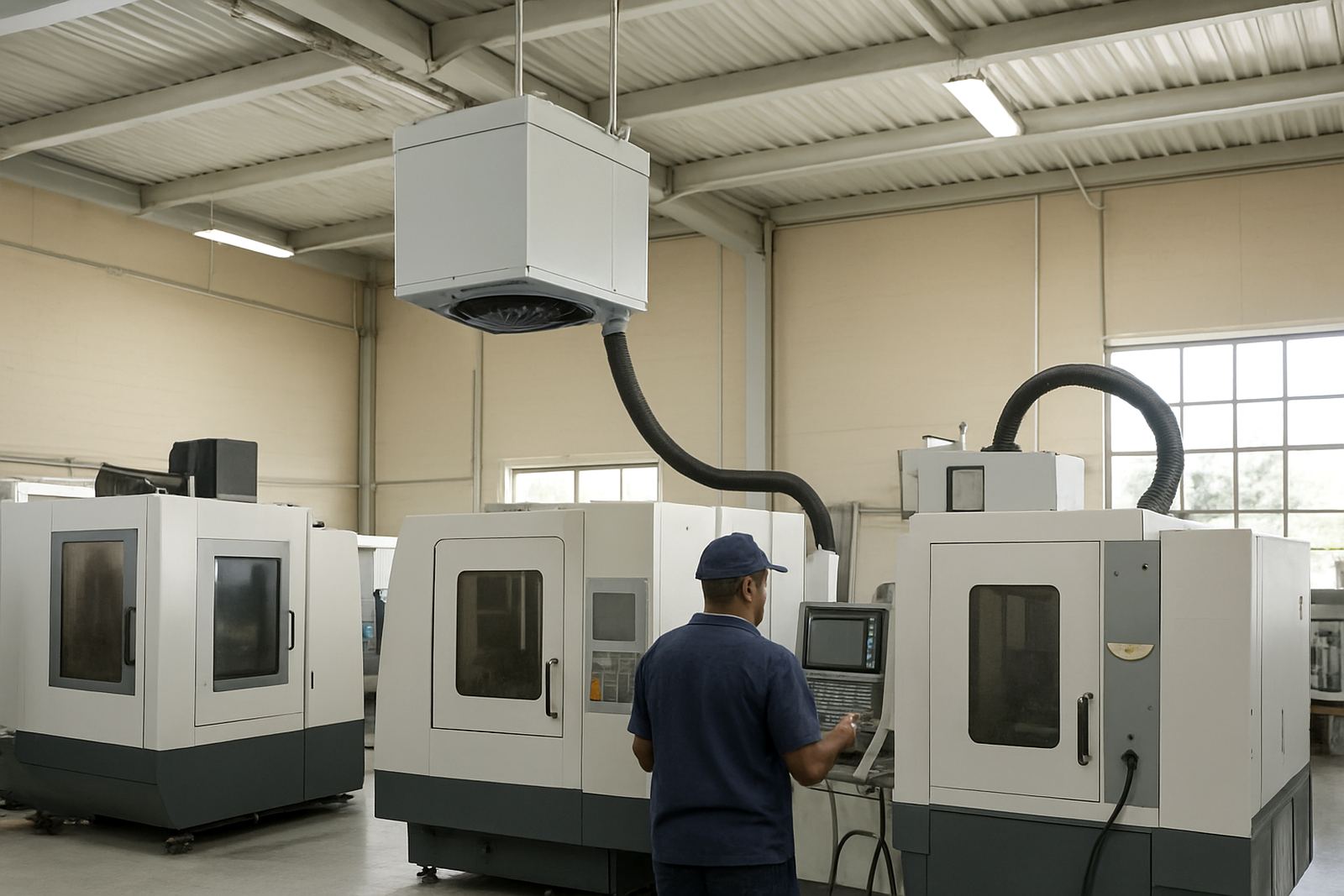
A mist collector is an air cleaning unit fitted to machining equipment or mounted near the source of contamination. It draws in air laden with oil mist, coolant vapour and fine droplets, then separates the liquid and returns cleaner air back into the workshop. On CNC lathes, machining centres, grinders and enclosed production cells, that makes a noticeable difference to floor conditions, visibility and general housekeeping.
In South African machine shops the biggest gain is usually not just comfort, but control. Less mist settling on guards, floors and control panels means fewer slip risks, less grime on the machine body and better conditions for staff working long shifts. It also helps where a workshop sits close to offices, stores or inspection areas. If your setup runs with doors opening often, you still want proper enclosure and extraction at source, otherwise the unit has to work too hard.
These systems are commonly used where coolant is recycled, where oil based cutting fluids are in circulation, or where high spindle speeds create fine airborne droplets. They are also worth considering in coastal areas such as Gqeberha and Port Elizabeth CBD, where humidity can make mist hang in the air longer and settle on metal surfaces faster.
Sizes and configurations for different machines
Tooling supplies mist collectors in compact and higher capacity formats so they can match the machine and the duty cycle. A small unit is often enough for an individual enclosed lathe or compact machining centre. Larger units suit multi-shift production, heavier mist loading, or machines that run long cycle times with aggressive coolant flow. When choosing size, it is better to size for the actual mist load than to buy too small and hope for the best.
Common options usually include side or top mounting, ducted connection, return drain arrangements and replaceable filter stages. Depending on the application, a workshop may need a unit that handles oil mist only, or one that can manage mixed coolant aerosol with fine particulate. Some users also prefer a remote mounting position to keep the machine footprint clear for service access.
- Compact units for single machines and tight floor space
- Medium units for standard CNC turning and milling centres
- Higher airflow units for long production runs and multiple machine bays
- Filter stage options for fine mist, oil aerosol and general workshop air cleaning
- Mounting and ducting choices for new installs or retrofit work
Where mist collectors suit South African production
These units suit machine shops making components for general engineering, automotive work, agricultural repairs, contract machining and precision parts. They are also useful in tool rooms, prototype areas and training workshops where a clean working area matters. In places like Struandale, Markman and Coega, where production often runs in enclosed bays with multiple operators, mist control helps keep the work area more manageable through the day.
They work especially well on machines that use coolant heavily or operate with high speed spindles. A mist collector can support cleaner conditions around inspection benches and measuring equipment too, because less airborne residue settles on surfaces. That said, it is not a substitute for good machine enclosure, correct coolant concentration and regular cleaning. If the machine is throwing mist out through open gaps, the source issue still needs attention.
For workshops near residential or mixed use areas, cleaner exhaust air can also help with neighbour concerns and general compliance thinking. It does not remove the need to check municipal, ventilation and occupational health requirements, but it is one more practical step toward a better run shop.
Installation, power supply and workshop setup
Most mist collectors are installed directly on or near the machine they serve, with the inlet positioned to catch airborne mist where it is created. Good placement matters. A unit fitted too far from the source loses efficiency, while poor duct routing can create pressure drop and reduce capture. In retrofit jobs, the installer should check access panels, guard positions, coolant return points and any moving axes before final mounting.
Power supply needs depend on the model and airflow rating, but many workshop units run on standard workshop electrical supply. When planning installation in South Africa, it is sensible to allow for load shedding conditions, correct isolator protection and safe restart after interruptions. If the unit is tied into a machine control circuit, the electrician should confirm that it starts and stops in the correct sequence. In some plants, a dedicated supply is preferred so the collector can keep running a short time after the machine stops and clear the air properly.
- Check inlet location against the source of mist
- Allow space for filter access and cleaning
- Confirm electrical supply, isolator and cable route before mounting
- Make sure coolant drain points return liquid safely
- Keep clear of hot swarf zones and moving parts
Maintenance and servicing that keep airflow up
A mist collector needs regular attention if it is going to keep performing properly. Filters load up over time and drainage points can clog with residue. If a unit starts to hum harder, move less air or leave more residue on nearby surfaces, that is usually a sign that service is overdue. In a shop that runs oily coolant or heavy production, weekly checks are often worth it, not once in a blue moon.
Good upkeep includes checking the filter condition, cleaning housings, confirming the drain path is clear and making sure the motor and fan assembly are free from build-up. Where a unit is mounted high up, plan safe access with a step platform or lift. Tooling can support related workshop care services such as inspection, holder cleaning and collection and delivery, which helps reduce downtime when parts need to come out of service for attention.
If the system is noisy, vibrating or returning mist into the bay, do not ignore it. Those signs usually mean blockage, poor balance or a worn component. Catch it early and you avoid more expensive damage later on, especially in production environments that can not afford stop-start issues.
What to check before you order
Before placing an order, gather the machine make and model, enclosure dimensions, coolant type, duty cycle and available mounting space. It also helps to know whether the unit will serve one machine or several, and whether you need local exhaust at the source or a general air cleaning setup for a bay. If the workshop uses water based coolant, oil based fluid, or a mix, say so clearly because that affects the filter and drain arrangement.
You should also check the available power supply, preferred control method and whether there is room for maintenance access. For busy sites in Gqeberha, Kariega and Despatch, delivery access and safe offloading matter too. If the unit is going into a machine room with multiple shifts, ask for a model that can handle the actual hours of use, not only the brochure rating. That part gets overlooked often.
- Machine type, size and enclosure layout
- Coolant or oil type used in the process
- Required airflow and expected mist load
- Mounting position and clearance for servicing
- Electrical supply and control sequence
- Any local compliance or housekeeping needs at the site
Key facts
| Type | Air cleaning system for oil mist and coolant vapour |
|---|---|
| Typical use | CNC lathes, machining centres, grinders and enclosed production machines |
| Airflow options | Compact to high capacity models for single machines or multiple bays |
| Power needs | Workshop electrical supply, model dependent |
| Mounting | Machine mounted or nearby ducted installation |
| Service items | Filters, drains, housings, fan checks and routine cleaning |