
What a dividing head does in the workshop
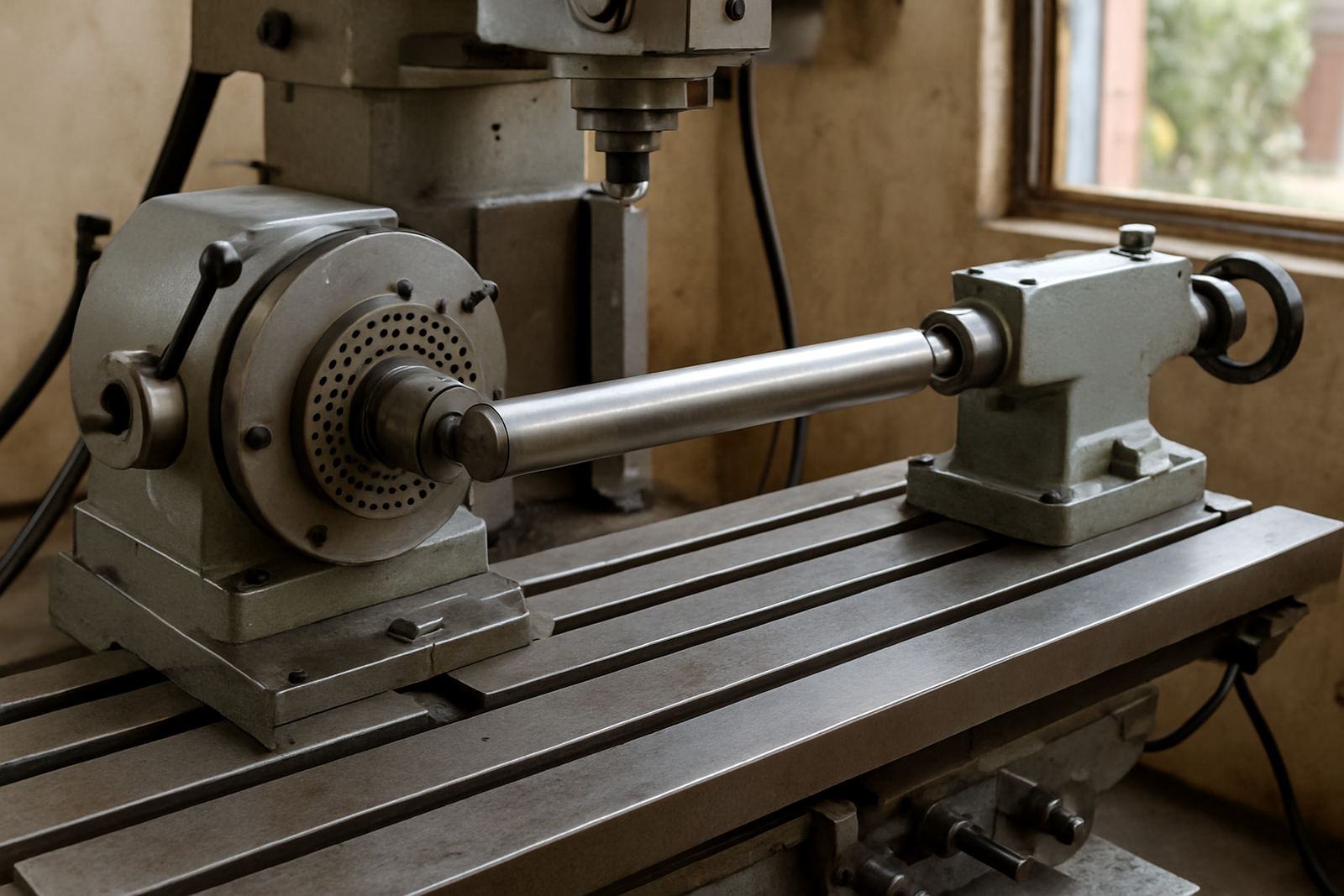
A dividing head is a fixturing unit that lets you rotate a workpiece by a known angle, then lock it in place for the next cut, hole or tooth form. In practical terms it is used when a job must be repeated around a circle with proper accuracy, whether you are cutting gear teeth, drilling bolt circles, milling flats or setting up a hexagon. For small and medium workshops, it saves time on layout work and reduces scrap.
Most units mount on a milling table or machine bed and work with a tailstock for support on longer shafts. They are also used for prototype work where the part count is low but the tolerance still matters. If your shop handles repair jobs, production batches, or one-off development work, a dividing head gives you more control than marking out by hand.
- Angular indexing for gears, splines and fluted parts
- Part spacing for circular drilling and milling
- Use with tailstock support on long workpieces
- Suitable for manual workshop setups and repeat production runs
Sizes and options for different machine shops
Dividing heads come in several sizes, usually chosen by swing, centre height, spindle bore and the size of work you need to carry. Smaller units suit toolrooms and light machining, while heavier units are better for production work, larger shafts and fixtures. The right choice depends on your machine table size, the weight of the part and how often you will change setups.
Common options include plain or index type heads, vertical and horizontal mounting, and ratios suited to standard dividing calculations. Some shops want a compact unit for prototyping, while others need a heavier body with stronger clamping for everyday use. If your work involves mixed jobs, ask for a unit that can handle both single part setups and regular batch work without constant re-setting.
- Compact workshop units for lighter milling jobs
- Heavier bodies for larger components and repeated use
- Horizontal and vertical mounting options
- Indexing ratios suited to common workshop calculations
Where dividing heads suit local production work
These units are well suited to machine shops in Struandale, Markman, Coega, Kariega, Despatch and the Port Elizabeth CBD, especially where quick turnaround matters. In Gqeberha, many workshops deal with maintenance work, marine-related jobs and general engineering, so a dependable dividing setup helps keep parts moving even when schedules change. Coastal humidity can also affect clean storage and moving parts, so the ability to keep a unit clean and protected is important.
Dividing heads are useful in toolrooms, fabrication shops, maintenance departments and smaller production lines. They are also a practical choice for businesses that do not run full CNC indexing on every job but still need accurate repeatability. If your power supply is unstable during load-shedding, that is not usually a problem for manual dividing work, although your milling machine or spindle drive still needs proper backup planning.
- Gear cutting and repair work
- Fluted components, bolt circles and angular slots
- Prototype parts and short runs
- Workshops handling mixed manual and machine setups
Installation, setup and workshop requirements
Installation starts with solid mounting, correct table alignment and enough clearance for the workpiece, tailstock and cutter path. The unit must sit square to the machine table, with clamping that does not pull the body out of line. On some jobs the spindle centre must be set accurately to the cutter height, because a small error here will show up in the finished part. That is where proper setup saves rework.
These units do not normally need gas or special utilities. For most workshops the main requirement is a stable milling machine, suitable clamping gear and safe handling equipment for the part weight. If the job involves a heavier head and long shaft, allow for lifting assistance and enough room around the table. A clean, level installation makes a big difference when you are trying to hold tolerance and repeat the same angle across several parts.
- Check table capacity and machine clearance before ordering
- Use accurate clamping and alignment against the table
- No gas supply is required for the dividing head itself
- Plan for safe lifting if the unit or job is heavy
Care, servicing and keeping accuracy in use
A dividing head stays accurate longer when it is cleaned after use and kept free of swarf, coolant build-up and rust. The spindle, index plates and locking points should be checked regularly for wear or damage. If the unit starts feeling rough, develops play, or does not lock firmly, stop and inspect it before the next job. A small fault can grow into scrap parts very quickly.
Tooling supports related workshop services that help keep setup equipment in order, including inspection, cleaning and runout checks where required. In a humid coastal area, storage matters just as much as use. Wipe down exposed surfaces, keep the unit covered and do not leave it sitting with coolant on the body overnight. A bit of routine care goes a long way, especially on machines that are used on and off through the week.
- Clean swarf from the body, spindle and locking faces
- Inspect index plates and clamps for wear
- Store dry and covered in coastal conditions
- Check for play before gear or repeat jobs
What to check before you order a dividing head
Before ordering, check the machine table size, the centre height you need, the workpiece diameter and the spindle mounting arrangement. You should also know whether you need plain indexing, a certain ratio, or compatibility with a tailstock. If the job involves gears, confirm the tooth counts and whether the dividing method you plan to use matches the parts you produce. That saves time once the unit reaches the shop.
It also helps to confirm what accessories are included, such as index plates, centres, chucks or mounting hardware. Ask about delivery to your area, especially if the workshop is in Coega, Despatch or another site where access and offloading need planning. If you are unsure, give the team your machine make, table size and the type of work you run. A quick check up front usually avoids a second order later.
- Centre height and swing needed for your parts
- Indexing ratio and plate requirements
- Mounting method, tailstock support and accessories
- Delivery, offloading and workshop access details
Key facts
| Type | Workshop dividing head for angular indexing and repeat positioning |
|---|---|
| Use | Gear work, slotting, bolt circles, fluting and prototype machining |
| Mounting | Milling table or machine bed with suitable clamping |
| Options | Plain indexing, tailstock support, vertical or horizontal setup |
| Power / gas | No gas required; machine power depends on the milling setup |
| Maintenance | Clean after use, inspect locking points, protect from moisture and swarf |