

Home / Case Studies / Walmer Education Cell

Case Studies

Walmer Education Cell

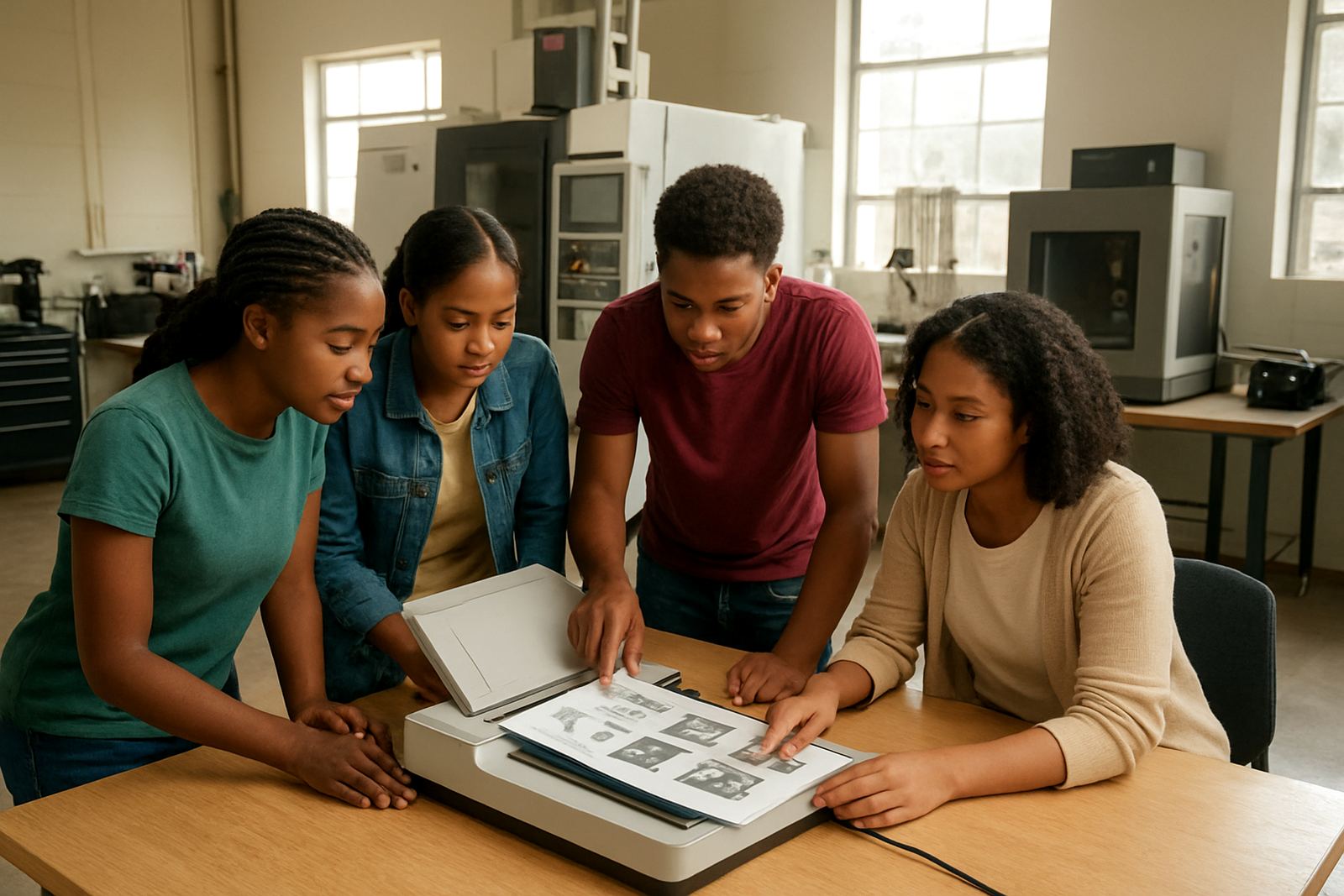
A training centre in Walmer needed practical scanning and fixture design capability for students entering manufacturing trades. We supplied a workable setup for classroom use, with enough precision for learning, repeatability and local support.

Walmer Education Cell

What the training centre needed in Walmer

The client was a skills training centre in Walmer, Gqeberha, supporting early-stage learners who needed exposure to scanning, simple fixture design and the basics of measurement-led manufacturing. Their goal was not a full production cell, but a teaching environment that could show students how parts are captured, checked and prepared for downstream machining or print work.

The brief was clear: keep the setup practical, teachable and suited to a busy education schedule. The centre needed entry-level scanning capability, a fixture design workflow for class exercises, and equipment that could handle regular student use without constant adjustment. They also wanted local backup, because when training depends on working kit, downtime affects the whole term.

  • Support for beginner scanning lessons and part capture
  • Fixture design exercises for small components and jigs
  • Equipment that could run in a classroom or light workshop
  • Simple maintenance needs for staff with mixed technical experience

Constraints that shaped the project

The main constraints were space, budget and the reality of power interruptions. The centre had to fit the setup into an existing training room, with enough table space for a scanner station, a small computer area and a clean layout for handling student work. Load-shedding meant we had to consider quick shutdowns and restart procedures, plus equipment that would not lose useful settings every time power dropped.

Another factor was the mix of learners. Some students were seeing scanning and fixture design for the first time, while tutors needed a system they could explain quickly. That meant avoiding over-complex hardware choices and focusing on repeatable steps, clear setup marks and easy calibration checks. In a learning room, fiddly kit can slow everything down and create more frustration than value.

Gqeberha’s coastal air also matters. We considered dust control and humidity, especially for stored accessories, scanner plates and small precision parts. Tooling recommended a layout that kept sensitive items in enclosed storage, with routine cleaning and inspection built into the weekly schedule. A little care goes a long way in coastal conditions, and the centre did not want avoidable corrosion or drift.

What we supplied and set up

We supplied an entry-level scanning and fixture design package aimed at teaching fundamentals rather than high-volume production. The setup included a compact scanner, a workstation for processing captured data, basic fixture design materials, and support items for measuring and alignment. We also provided guidance on handling, storage and calibration so the tutors could maintain the system between student groups.

To keep the learning practical, we focused on parts that students could recognise and measure in a lab setting: small brackets, simple housings, cut blanks and trial fixtures. The centre could then move from physical parts to digital capture, and from there into fixture concepts that support drilling, inspection or repeatable location. That sequence made the lessons easier to follow.

  • Entry-level 3D scanning package for classroom demonstrations
  • Workstation setup for scan review and simple model handling
  • Fixture design support using modular learning pieces
  • Alignment and calibration checks before handover
  • Basic maintenance notes for tutors and support staff

Timeline and installation process

The project ran over 3 weeks from confirmation to handover. In week one we checked the room layout, power access and storage needs, then confirmed the scanning area and teaching flow. Week two was used for supply, pre-setup checks and preparing the calibration procedure. In week three we completed installation, training and a handover session with the teaching team.

Because the centre was active during the week, installation had to work around class times. We planned the delivery to avoid interrupting lessons and staged the equipment so the tutors could see the full setup before students used it. The handover covered startup, shutdown, basic cleaning and what to do if a scan came in off-centre. That reduced the chance of confusion once the room was live.

We also gave the staff a practical service route through our Gqeberha base. If they needed a scanner check, guidance on fixture setup or help with maintenance, they had a local contact instead of waiting on long turnaround times. For a training centre this is a real benefit, because even small delays can knock a lesson plan out by a day or more.

Results in the classroom

Once the room was live, the centre could introduce students to part capture, dimensional checking and basic fixture thinking in a way that felt relevant to real workshops. The tutors reported that learners understood the link between physical parts and digital workflow much faster when they could scan, inspect and then design around the same component.

The setup also improved repeatability in class exercises. Students could run the same component through the process, compare results and learn why location, support points and orientation matter. That kind of repetition builds confidence. It also helps learners see that machining accuracy starts long before the first cut.

  • Students gained hands-on exposure to scanning and fixture concepts
  • Tutors got a repeatable process for class demonstrations
  • The room now supports multiple skill levels in one session
  • Maintenance and restart steps are simple enough for daily use

What we would do again for similar centres

We would follow the same pattern again for any education project that needs practical scanning and fixture design without overcomplicating the room. Start with the teaching outcome, then match the equipment to that outcome. Too many centres try to buy production-grade kit when they really need something that supports learning first. That usually creates extra cost and confusion.

We would also repeat the local support model. Training centres need fast answers, especially when multiple classes depend on one setup. Having the support team, service coordination and applications help based in Gqeberha made the project easier to manage, and it gave the tutors confidence that help was close by if anything needed checking. In a teaching environment, that matters just as much as the hardware.

If we were to extend a similar cell, we would add more structured calibration drills, a small library of sample parts and a simple checklist for weekly inspection. Those small steps keep the cell useful and keep students engaged without burdening staff with extra admin.

Key facts

Project locationWalmer, Gqeberha
Client typeTraining centre
Project timeline3 weeks
Core capability addedEntry-level scanning and fixture design
Base and supportStruandale, Gqeberha
Contact emailOur contact form

What our Precision Tooling customers say

Verified Google reviews

Questions we get asked

What type of centre was this project for?

It was for a training centre in Walmer serving students who needed practical exposure to scanning, measurement and fixture design.

How long did the project take?

The full project ran over 3 weeks from site review to installation and handover.

Why was local support important?

The centre needed quick help for calibration, maintenance and setup checks, so having support in Gqeberha reduced downtime and kept classes on track.

Planning something? Send the team a message.

Contact form